Cosmic explosion may have damaged DNA on Earth: How it affected evolution

 (photo: Pexels)
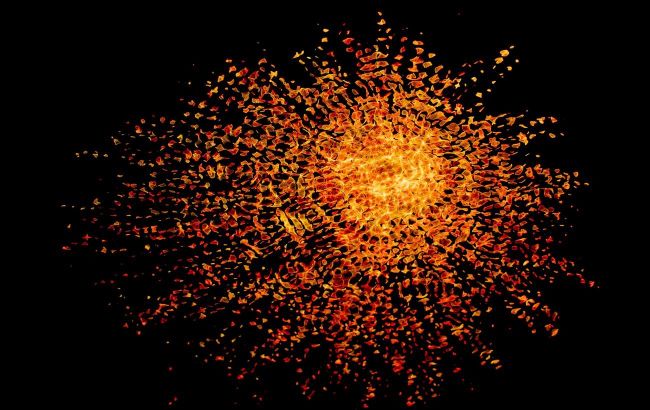
A star explosion may have changed the course of life on Earth 2.5 million years ago. A stream of cosmic rays from a supernova likely affected our planet for an extended period and may have damaged DNA, according to a study published in the scientific journal The Astrophysical Journal Letters.
From digital glitches to interstellar scales
Researchers' interest in cosmic rays often begins with local incidents.
In 2003, an electronic voting system in Belgium experienced a glitch caused by a bit flip triggered by a cosmic particle. This resulted in votes being counted incorrectly.
Understanding how particles from deep space can affect Earth-based technology prompted scientists at the University of California, Santa Cruz, to ask a much bigger question: how could such radiation affect biological life and its evolutionary paths over millions of years?
100,000 years of radiation exposure
A key piece of evidence for the ancient cosmic event was the discovery of the iron-60 isotope in ocean-floor deposits.
Scientists note that the element is a byproduct of supernova explosions. Analysis showed that a star exploded relatively close to the Solar System approximately 2.5 million years ago.
Computer modeling of the spread of particles showed:
- Radiation from the explosion reached Earth and bombarded its surface for approximately 100,000 years.
- The radiation was intense enough to cause damage and breaks in the DNA structures of living organisms.
An evolutionary explosion in Lake Tanganyika
To find biological evidence supporting their hypothesis, astrophysicists turned to studies of ancient bodies of water. Lake Tanganyika in Africa, which is between 9 and 12 million years old, is one of the most biodiverse places in the world.
Biological data indicate that approximately 2.5 million years ago, the lake experienced a rapid emergence of new species among cichlid fish, along with accelerated recombination of associated viruses.
The overlap in timing with the supernova explosion supports the theory that cosmic radiation may have acted as a natural mutagen, triggering a rapid evolutionary leap.
However, scientists cautioned that further extensive research is needed to definitively confirm a direct cause-and-effect relationship.