Strawberries in fall: How to prune, feed, and protect them for winter

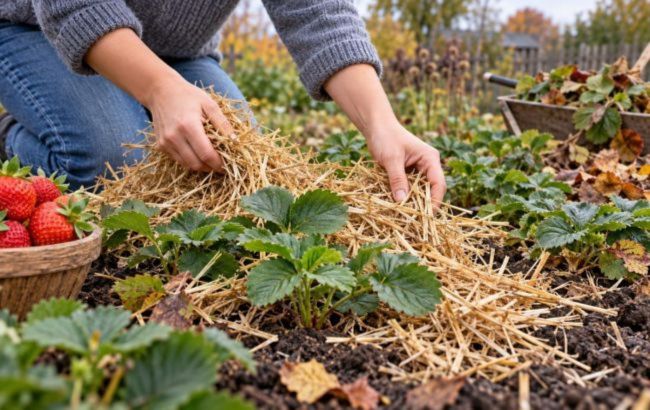 To get a good harvest next year, strawberries need more than a drastic fall haircut in autumn (photo: Styler)
After the growing season ends, a strawberry bed doesn't require complicated care, but you shouldn't skip a few important steps. Before winter, remove diseased and damaged plant parts, provide proper nutrition, and wait for the right time to cover them.
RBC-Ukraine explains how to prepare strawberries for winter to protect the plants from frost without unnecessary care.
Don't rush to cut off all leaves
If the strawberries are healthy, you don't need to remove all their leaves in the fall just to keep the bed "clean." Oregon State University Extension recommends waiting until the leaves naturally die back; they help store nutrients and protect the plant crown from the cold.
At the same time, remove diseased, severely damaged, or dried leaves. It is best to take them away from the bed, especially if the strawberries suffered from disease during the growing season.
In the fall, also remove excess runners if you don't need them for propagation. This will prevent the plant from using resources to produce new daughter plants.
How to fertilize strawberries before winter
Don't overdo fall fertilization. Excess nitrogen can stimulate new growth that will not have enough time to properly prepare for cold weather.
Penn State Extension notes that strawberry winter hardiness depends not only on temperature but also on how well the plants have acclimated to the cold. Excessive nitrogen fertilization in the fall can reduce their winter hardiness.
So the general rule of "adding plenty of fertilizer before winter" does not apply here. It is better to consider the condition of the plants and the results of a soil test, if one has been conducted.
When should strawberries be covered?
You should not rush to cover the plants, either. If you cover the bushes too early, while they are still actively growing, it can interfere with their normal preparation for winter.
Clean, dry straw is commonly used for protection. Penn State Extension recommends about 4 inches of straw mulch, applied after cold weather sets in.
The key indicator is not the first cold day but sustained cooling, when the plants have already entered dormancy. According to Penn State recommendations, one indicator of readiness is a soil temperature of around 39°F or lower.
Spread the straw in a loose layer rather than forming dense, wet clumps. In regions with very wet winters, excessively damp covering can increase the risk of rot, so adapt the protection method to local weather conditions.
The key point: don't cover strawberries according to the calendar. If October is still warm, it is better to wait and protect the bed once consistently cold weather sets in.
Earlier, RBC-Ukraine explained why a poor harvest is not always caused by a lack of nutrients in the soil.
This material is for informational purposes only and should not be used for medical diagnosis or self-treatment. Our goal is to provide readers with accurate information about symptoms, causes, and methods of detecting diseases. RBС-Ukraine is not responsible for any diagnoses that readers may make based on materials from the resource. We do not recommend self-treatment and advise consulting a doctor in case of any health concerns.