Is your garden soil exhausted? Key signs you can spot without lab tests

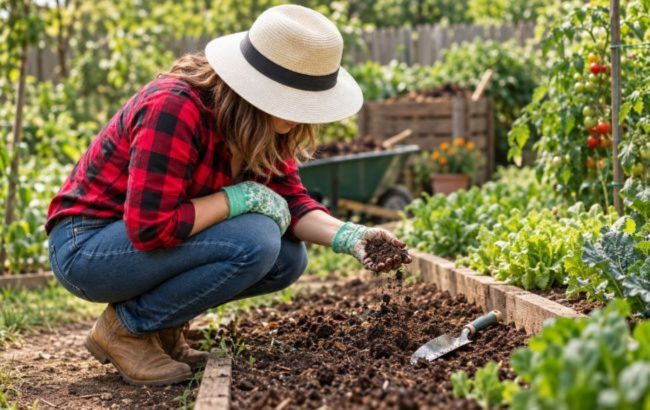 Soil health can be assessed even without a laboratory test (photo: Styler)
Garden soil can gradually lose its good structure, become compacted, drain water less effectively, and create unfavorable conditions for roots. At the same time, not all problems are immediately visible, and a poor harvest does not always mean a lack of nutrients.
RBC-Ukraine explains what signs may indicate deteriorating soil health and what you can check directly in your garden bed.
Soil becomes hard and turns to dust
One of the first things to watch is soil structure. Healthy soil usually has a porous, crumbly structure: small aggregates break apart easily, while pores between them allow air and water to move through.
If the soil becomes very hard after drying, forms large clumps, or, conversely, turns into fine dust, this may indicate structural problems. Poor structure can also make it harder for roots to develop.
University of Wisconsin Extension notes that powdery soil or large, hard clumps can signal poor soil structure.
Simple test: Dig up a small clump of soil. If it crumbles easily into small aggregates, that's a good sign. If you have to break it apart with a shovel, or it falls apart almost like sand, the soil may need attention.
Crust forms on surface after rain
Another telltale sign is a hard crust on the surface of the garden bed.
It can form after heavy rain when soil aggregates break down, and fine particles fill the surface pores. As a result, water penetrates the soil less effectively, surface runoff increases, and young plants have a harder time emerging.
Penn State Extension notes that soil crusting reduces water infiltration and can interfere with seedling emergence.
Pay particular attention if this crust regularly appears after rainfall rather than occurring just once after an exceptionally heavy downpour.
Water either pools on surface or disappears too quickly
Check what happens to water after watering or rain.
If puddles remain on the garden bed for a long time, the soil may have problems with water infiltration because of compaction or poor structure. The opposite extreme is when water quickly moves deeper into the soil, and the surface becomes dry almost immediately.
The soil's ability to absorb and retain water is directly related to its structure, porosity, and organic matter content.
That's why it's important to look not only at how much water is present, but also what happens to it after watering.
Roots struggle to penetrate the soil
You can check this sign by digging up a plant after the growing season.
In problematic soil, roots may remain mostly in the upper layer, hit a dense, hard layer, or grow horizontally instead of penetrating deeper into the soil.
Compaction reduces the number of pores in the soil and restricts the movement of water and air, as well as root development.
Compaction is especially common in areas where people regularly walk on garden beds, drive equipment over them, or work the soil when it is too wet.
Plants have started growing poorly for no obvious reason
Another warning sign is when plants in the same area grow worse year after year: they develop more slowly, have pale or yellowing leaves, flower less, or produce smaller yields.
But there is an important caveat: don't immediately blame a lack of fertilizer. Yellow leaves, stunted growth, and similar symptoms can result not only from nutrient deficiencies but also from diseases, pests, weather, watering, or other growing conditions. University of Iowa Extension specifically emphasizes that visual symptoms alone cannot accurately identify nutrient deficiencies.
What to do if you notice these signs
Don't simply apply as much fertilizer as possible. First, determine the actual problem in your garden bed.
Start by checking the soil structure, compaction, and how well it absorbs water. It's also useful to look for earthworms and other signs of biological activity in the soil.
University of Maryland Extension recommends simple field observations, including assessing soil structure, the presence of earthworms, compaction, and the rate at which water infiltrates the soil.
And if the problem is specifically related to nutrients or soil acidity, the most reliable way to confirm it is to have the soil tested. This can help determine what the soil actually lacks rather than applying fertilizer blindly.
Previously, we explained the 5 main reasons grapes can start rotting right on the vine.
This material is for informational purposes only and should not be used for medical diagnosis or self-treatment. Our goal is to provide readers with accurate information about symptoms, causes, and methods of detecting diseases. RBС-Ukraine is not responsible for any diagnoses that readers may make based on materials from the resource. We do not recommend self-treatment and advise consulting a doctor in case of any health concerns.