Sticker residue on furniture or appliances? Here's how to remove it safely

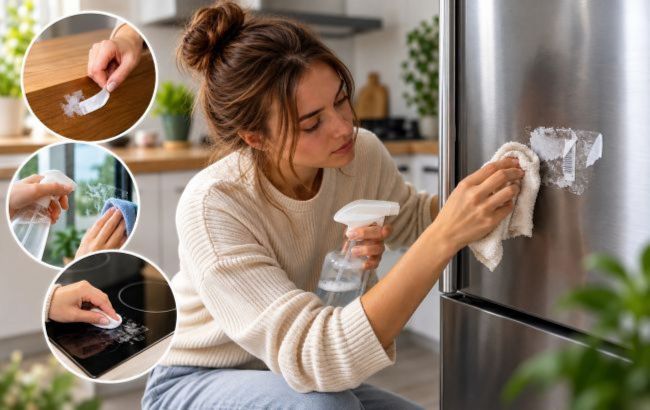 Alcohol and oil can remove sticky residue, but they can damage certain finishes (collage: Styler)
Sticky residue often remains on furniture and household appliances after you remove price tags, protective films, and stickers. You can remove it without vigorous scrubbing, but the wrong product can damage lacquer, plastic, or decorative finishes.
RBC-Ukraine explains which products can remove adhesive residue, when you can use alcohol, and why ordinary cooking oil isn't suitable for every surface.
What to do before removing a sticker
Before cleaning, identify the surface material. For example, a wooden table may have a lacquered finish, while a refrigerator door may have a decorative film that merely imitates metal.
First, try gently removing the remaining sticker with your fingers. If the paper backing tears, don't pry it off with a sharp knife.
On moisture-resistant surfaces, you can use a soft cloth dampened with warm, soapy water. This helps soften the paper residue and some of the adhesive. Avoid soaking the surface or using abrasive sponges.
If adhesive remains, choose the next cleaning method according to the material.
How to remove adhesive from wooden furniture
When cleaning wooden furniture, consider the finish type. Lacquered wood, laminated boards, and untreated timber react differently to water and cleaning products.
Experts at the University of Georgia recommend using soap suds on wooden surfaces with a suitable protective finish. This method lets you treat the residue without over-wetting the material.
How to clean furniture properly:
-
Add a small amount of dish soap to warm water.
-
Whisk the solution until it lathers.
-
Use only the foam to clean the sticky residue with a soft cloth.
-
Gently wipe the affected area.
-
Remove any soap residue with a clean, well-wrung cloth.
-
Wipe the furniture dry.
These recommendations apply to wood with an appropriate finish, not all wooden products. If the adhesive remains, do not immediately resort to alcohol or acetone. These products can damage lacquer or paint.
Use extra care when cleaning furniture made from particleboard or MDF. Water entering joints and unprotected edges can cause the material to swell.
For untreated wood, use only methods the furniture manufacturer approves.
How to remove sticky residue from plastic
Plastic containers, furniture, and household appliance casings often have stickers that leave adhesive residue behind.
According to the University of Georgia, warm, soapy water can remove adhesive tape residue from certain plastic surfaces.
Procedure:
-
Dampen a soft sponge or cloth with warm, soapy water.
-
Gently wipe the sticky area without applying too much pressure.
-
Once the adhesive softens, gently wipe it off with a cloth.
-
Remove any soap residue with a clean, damp cloth.
-
Wipe the surface dry.
If a sticker has been exposed to sunlight or moisture for a long time, it may be more difficult to remove.
Do not use acetone or nail polish remover as a universal solution for cleaning plastic.
According to the Milwaukee city administration, acetone and nail polish remover can soften and dissolve certain plastics, including acrylic glass. Therefore, before using any solvent, check whether it is compatible with the specific material.
How to remove sticker residue from glass
On ordinary glass without a special coating, warm, soapy water can often remove adhesive residue.
First, remove the paper backing. Then wipe the sticky area with a soft cloth, gradually lifting the residue. If the adhesive is particularly stubborn, the University of Georgia describes a separate method for glass and mirrors using a household ammonia-based cleaner.
However, do not use this method without checking the surface's instructions. Ammonia-based cleaners may be incompatible with decorative films, certain coatings, and adjacent materials.
For household cleaning, start with soapy water and, if needed, use a product designed for the glass type. Do not use metal blades to pry stickers off mirrors, tinted glass, or surfaces with protective films.
Can you use alcohol to remove adhesive?
Isopropyl alcohol can dissolve certain sticky residues, but it isn't suitable for all materials.
The Milwaukee city administration notes in its cleaning recommendations that isopropyl alcohol removes certain resinous and sticky residues.
Before using alcohol, you should:
-
Check whether it is approved for the specific surface.
-
Test the product on an inconspicuous area.
-
If the instructions permit, apply a small amount to a soft cloth.
-
Gently treat the residue.
-
Remove any remaining product using an approved method.
Do not use alcohol on lacquered, painted, or plastic surfaces unless you have confirmed they can withstand it. Remember that alcohol-based products are flammable. Keep them away from open flames and heat sources.
Does sunflower oil help remove adhesive?
People often use cooking oil as a home remedy for sticky residue.
It can loosen the bond between certain adhesives and a smooth surface. However, the results depend on the adhesive's composition, and the oil itself can leave a greasy stain.
Use this method only on nonporous materials that can tolerate grease and can be washed afterward.
Do not apply oil to untreated wood, fabric, porous stone, or other materials that may absorb grease.
Experts at the University of Georgia describe specific methods for removing oil-based stains from different materials in their cleaning recommendations. This also helps explain why using oil to remove adhesive can create a new problem.
This method is not suitable for electronics: grease must not enter buttons, connectors, or ventilation openings.
How to remove adhesive from a refrigerator and other appliances
Sticky residue often remains on refrigerators, washing machines, and microwave ovens after factory stickers are removed. Before cleaning, turn off the appliance and unplug it.
For exterior surfaces that can be cleaned with moisture, use a soft cloth with a small amount of soapy water.
If the adhesive won't come off, check whether a specialized cleaner is approved for that appliance's finish.
Never spray liquid directly onto buttons, touch panels, connectors, or ventilation openings.
Researchers at the US Pacific Northwest National Laboratory explain that moisture can damage electronic systems. It can contribute to corrosion and electrical component malfunctions.
Therefore, use even ordinary soapy water carefully to prevent it from entering the appliance.
Which products can damage surfaces?
Not all household methods for removing adhesive are equally safe.
Use particular caution with:
-
Acetone. Can damage certain plastics, paint, and lacquer.
-
Alcohol. Is not suitable for all decorative and protective coatings.
-
Cooking oil. Can leave stains on porous materials.
-
Metal scrapers. Can scratch glass, plastic, and furniture.
-
Stiff sponges and abrasive powders. Can damage glossy finishes.
-
Excessive amounts of water. Are particularly hazardous to furniture board joints and electronic devices.
If a surface begins to change color, lose its shine, or become sticky after you apply a cleaning product, stop cleaning immediately.
Start with the mildest method approved for the specific material, and use specialized cleaners only if necessary.