Spain sets up climate shelter network in response to heatwave-related deaths

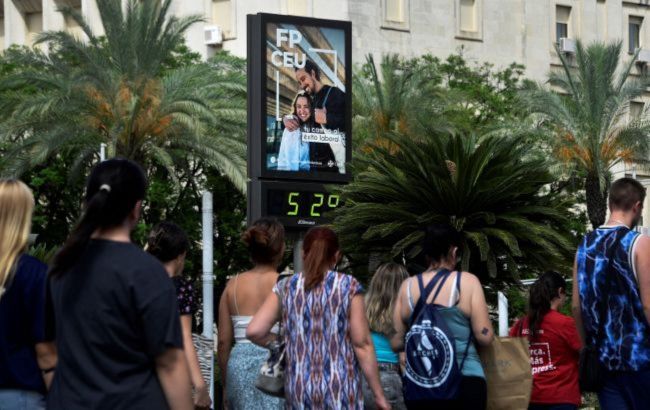 Residents of Spain during an extreme heatwave in Seville (photo: Getty Images)
After record heat and thousands of deaths, Spain has become one of the first countries in Europe to establish a large-scale network of climate shelters for people, reports Euronews.
The government, led by Spanish Prime Minister Pedro Sánchez, announced plans to create a nationwide network of climate shelters following an exceptionally hot summer.
These are specially equipped public spaces where people can take refuge from the dangerous heat. They typically provide air conditioning, drinking water, and rest areas.
Barcelona alone has already around 400 such facilities. They are set up in libraries, museums, sports centers, and shopping malls.
They are primarily intended for the most vulnerable groups, including the elderly, children, people with chronic illnesses, and those who cannot cool their homes.
Spain accelerated the program after a heatwave during which temperatures in some regions reached 45°C.
According to Euronews, more than 150,000 heat-related deaths were recorded in the country in 2025 alone. Experts note that a significant share of these deaths was linked to prolonged exposure even to moderately high temperatures.
One of the most widely reported cases was the death of 51-year-old street cleaner Montse Aguilar in Barcelona. She collapsed after working in extreme heat and later died. The incident sparked protests in the city demanding better protection for outdoor workers.
Other countries at risk
Heat is increasingly affecting not only southern Europe. Last year, extreme temperature waves hit Italy, France, Portugal, the UK, and even Finland, where an ice rink was temporarily converted into a climate shelter.
Elvira Jiménez, a researcher at the Open University of Catalonia's Digital Transformation and Governance Research Center, called extreme heat "the deadliest environmental hazard" in Europe.
"Southern European countries such as Spain, Italy, Greece, France, Croatia, Cyprus, Slovenia, Malta, and Serbia have the highest increase in mortality, highlighting the urgent need for adaptation measures, such as climate shelters," she added.
In her view, climate shelters should not be a temporary solution, but part of a long-term strategy for urban climate adaptation.
This includes not only creating cooled public spaces, but also a broader redesign of urban infrastructure — expanding green areas, transforming transport systems, and supporting the most vulnerable populations.
Notably, Europe incurred multi-billion-euro losses due to extreme weather last year. According to a study published in September 2025, heatwaves, droughts, and floods cost the EU economy at least €43 billion in a single summer.
The hardest-hit countries were in the Mediterranean region, including Spain, Greece, Italy, and Portugal. Researchers warned that, due to global warming, extreme weather events will become more frequent, and economic losses could rise to €126 billion by 2029.