Spain heads to snap election amid political crisis

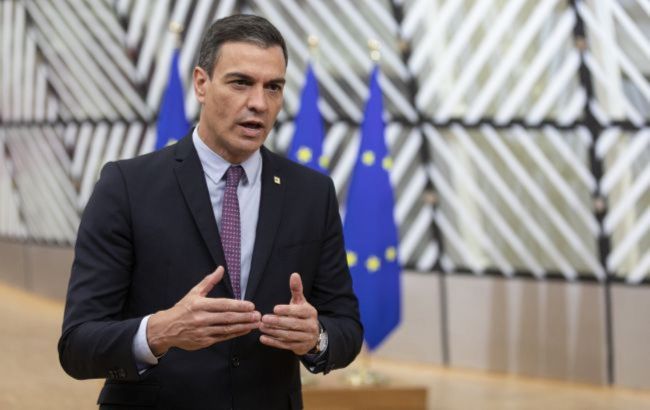 Pedro Sánchez (photo: Getty Images)
Spanish Prime Minister Pedro Sánchez has announced the dissolution of parliament and snap general elections. The date has already been set for November 29, 2026, according to El País and Politico.
Sánchez acknowledged that the government made mistakes and did not accomplish everything it had set out to do.
He made the decision over the weekend after consulting cabinet members, party leaders, and partners from other parties. Parliament is being dissolved nine months before the end of its term, which Sánchez had always intended to complete.
Politico says the election could mark "the demise of the EU's last major Socialist government" (Sánchez is the leader of the Socialist Party – ed.). The outlet also notes that the vote could push one of US President Donald Trump's most prominent European critics out of the political front line.
Sánchez also recalled the unprecedented crises the country had faced—wars and geopolitical upheavals. He said he had fought against tyrants, techno-oligarchs, and genocidal regimes.
Politico notes that Sánchez is among the Western leaders who have most strongly condemned Trump and Israeli Prime Minister Benjamin Netanyahu over the conflicts in Gaza and Iran. He has also clashed with tech giants, including Elon Musk.
Announcing the election, the prime minister warned of the growing influence of far-right forces.
"You, the Spanish people, must decide what role you wish to play in this era, and what role you want Spain to play," Sánchez said in an address to the nation.
"You must decide whether to join the far-right wave that drives regression wherever it governs, or whether you want Spain to remain a bastion of openness, social justice, and environmental responsibility," he added.
According to El País sources in the royal household, Sánchez informed King Felipe VI of his decision on Sunday afternoon.
What triggered this
Congress's failure last Friday to pass two government housing decrees triggered the election. The measures included additional steps to protect tenants and address the housing crisis.
This came amid protests that erupted after 87-year-old Maricarmen Abascal was evicted from an apartment in Madrid. According to Politico, she had lived there since 1956.
On October 3, tens of thousands of people took to the streets in around 50 Spanish cities. They called for stronger tenant protections and measures to make housing more affordable. According to Reuters, around 70,000 people attended the protest in Madrid.
Unaffordable housing tops the list of concerns among Spanish voters, Politico writes. The publication suggests that Sánchez appears to want to make the issue a central theme of his election campaign, believing it could work in his favor.
At the same time, Sánchez's position has already been weakened by corruption cases involving his Socialist Party. In the summer, he also faced heavy criticism over the government's handling of the migration crisis in Ceuta.
Politico adds that ordinary Spaniards are barely feeling the benefits of economic growth and record employment. Inflation is outpacing wage growth, while prices and housing costs keep rising.
What the polls say
Most polls indicate that the center-right People's Party could win the election. It currently has the support of 34 percent of voters.
Sánchez's Socialist Party ranks only second at 26 percent. It trails the leader by eight percentage points.
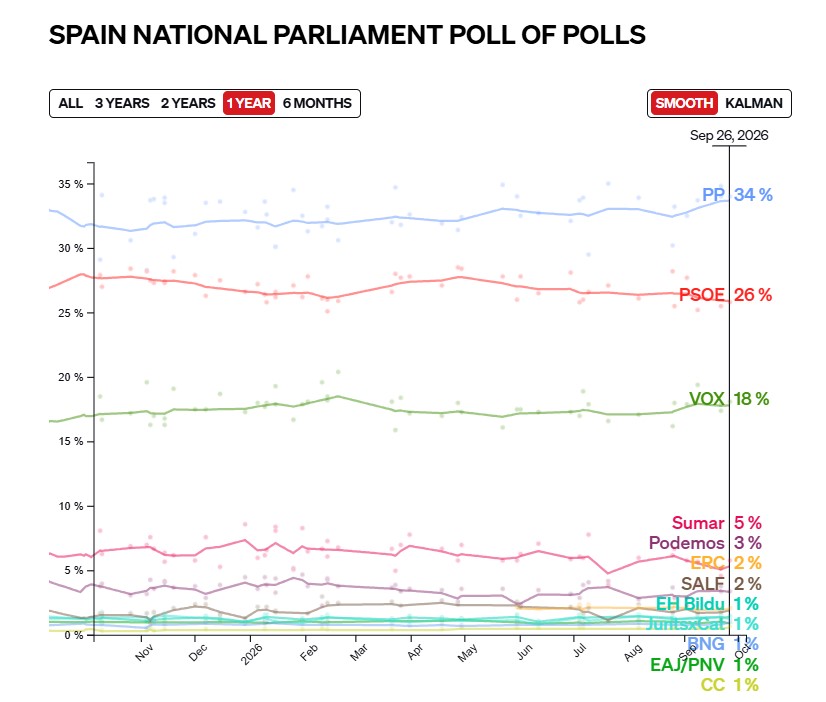
Polling results in Spain as of September 26 (screenshot from politico.eu)
The far-right Vox party is projected to win 18 percent. The People's Party is likely to form a coalition with Vox.
"At last," the People's Party said in response to the election announcement. The political force had been calling for snap elections almost since Sánchez retained power in late 2023.
The election announcement caught the fragmented left-wing parties off guard. For the Socialists to form a new government, forces to their left would need to unite in a viable alliance, the publication writes.
Sánchez's coalition government has been in power since 2023. Its partners from the Sumar movement currently lack a leader, as Deputy Prime Minister Yolanda Díaz declined to run for re-election. The movement is expected to name its new leader on October 17, when the party changes its name to "Broad Front."
Health Minister Mónica García is widely seen as the leading candidate for the leadership role. Culture Minister Ernest Urtasun will be the movement's main figure in Catalonia.
As reported in late August, Sánchez said the migration crisis in Ceuta could have been triggered by fake news on social media.
According to him, the posts were spread by accounts linked to Russia, Israel and an international far-right organization.
Meanwhile, as previously reported, Ukraine's new request for additional aid has yet to win approval in Brussels.
Le Monde says elections in several countries and negotiations over the EU's next budget are influencing the decision.