Europe's migration bomb: How Ceuta migrant surge split EU and played Kremlin's game

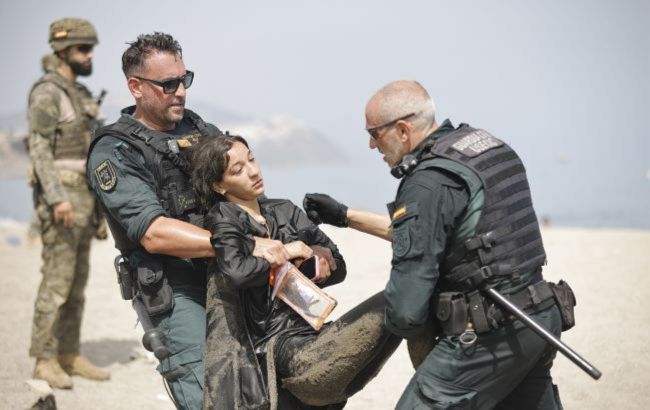 Spanish Ceuta enclave encountered with migration crisis (photo: Getty Images)
The migration crisis in Ceuta ended almost as quickly as it began. But it was only part of a much larger problem.
This RBC-Ukraine article explores how events in the Spanish enclave exposed deep divisions within the European Union—and how Europe's adversaries are exploiting those weaknesses.
Key takeaways:
Ceuta border breach: Large groups of Moroccan migrants, numbering about 60,000 people, crossed en masse into the Spanish enclave of Ceuta in North Africa.
EU divisions: The crisis exposed vulnerabilities and a lack of unity within the bloc. Instead of backing Spain, countries including Denmark, the Czech Republic, and Italy called for restricting Spain's participation in the Schengen Area or unilaterally closing their borders.
Spain and Brussels respond: Prime Minister Pedro Sánchez sharply criticized fellow European leaders for trying to isolate Spain rather than help it. Later, the leaders of 22 EU member states signed a joint letter condemning the use of migration as a hybrid weapon.
Hybrid pressure tactic: Using migrants as a tool of "migration blackmail" has become a common practice among neighboring regimes—including Morocco, Türkiye, and Belarus—to extract political and economic concessions.
For several days, the small Spanish city of Ceuta on Africa's northern coast dominated headlines in leading international media and across European capitals.
Although the latest crisis has now largely been resolved, it once again exposed internal weaknesses and divisions inside the EU—a bloc designed to function as a united whole.
A major crisis in a small city
On Thursday, July 30, large groups of Moroccan migrants effectively breached the border and entered the Spanish enclave of Ceuta in North Africa. Within just 24 hours, their number reached about 60,000—a major crisis for a city with a population of only around 85,000.
The Spanish government described the incident as a violation of the country's sovereignty and deployed military and police forces to the city. The European Union, however, failed to produce a unified political response, leaving individual member states to react on their own.
France announced it would deploy troops to the French-Spanish border. Some countries, including Denmark and the Czech Republic, called for suspending Spain's participation in the Schengen Area to prevent migrants from moving deeper into the EU.
Italy was among the most vocal, announcing that it was unilaterally suspending the Schengen Agreement with Spain—without acknowledging that such a move is not legally possible. Moreover, although Ceuta is Spanish territory, it is not part of the Schengen Area.
Eventually, the EU did manage to adopt an official common position by issuing a joint letter.
The signatories—leaders of 22 of the EU's 27 member states—stressed that uncontrolled border crossings and the use of migration as a tool of hybrid pressure are unacceptable. They argued that such situations undermine the bloc's common migration policy. The letter also called for the rapid deployment of EU mechanisms, including the Frontex border agency, to restore control.
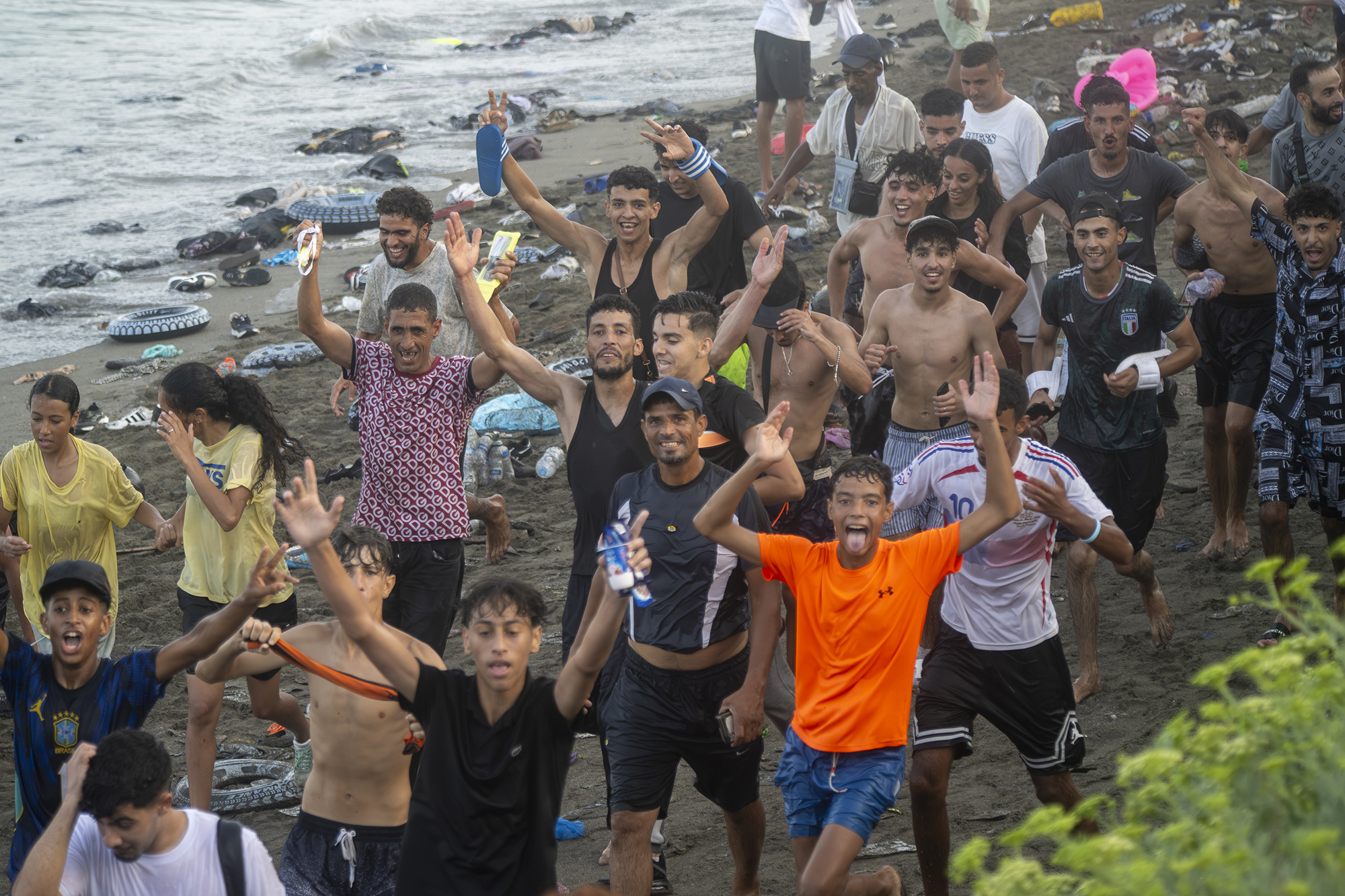
Thousands of migrants crossed from Morocco into Ceuta (photo: Getty Images)
Meanwhile, Spanish Prime Minister Pedro Sánchez traveled to Ceuta on Friday to take personal control of the situation. According to the government, the crisis was largely resolved within 48 hours, with most undocumented migrants removed from the city and security conditions returning to normal.
Sánchez also sent a letter to the European Commission expressing frustration with the responses of some of his European counterparts, who, during the crisis, rushed to isolate Spain rather than offer assistance.
He also pointed to Frontex data showing that the number of undocumented migrants entering the EU through Spain is only half the number entering through Italy—even though Spain is the only EU member state with a land border with Africa.
Both the EU's joint letter and Sánchez's letter call for an emergency video conference of EU interior ministers as soon as possible. The meeting is expected to develop a common response to such incidents and make clear that protecting the bloc's external borders is a shared responsibility of all EU member states, not just those on the front line.
Despite the tensions and strained diplomatic atmosphere, the crisis could be considered resolved. In reality, however, Ceuta is only a symptom of much deeper problems.
Who and why uses migrants
What triggered this sudden mass border crossing? Sánchez says criminal smuggling networks spread false rumors claiming that undocumented migrants could no longer be deported from Spain.
The rumors stemmed from a June ruling by Spain's Supreme Court, which found that the government could not immediately deport migrants who reached Spanish territories in Africa by sea. According to Sánchez, many people mistakenly interpreted the ruling as a blanket ban on deportations, when in fact it only affected the timing of the process.
Whatever the court ruling's impact, it does not explain certain aspects of the crisis—such as why Moroccan authorities suddenly stopped enforcing the border.
"They just kept saying, 'Go that way, go that way,'" one migrant told The New York Times, describing the actions of Moroccan police. According to him, officers did not stop them but instead pointed them toward the border. Other migrants shared similar accounts with reporters. Some Spanish media outlets have even claimed that Moroccan intelligence agents were among those who entered the city.
Spain has long accused Morocco of using migrant flows as a tool of political pressure. Similar mass crossings into Spain's North African enclaves have occurred before during periods of strained relations between Madrid and Rabat.
Morocco is far from unique in using such tactics. Europe's vulnerability on migration is well known. Former Libyan dictator Muammar Gaddafi once sought to pressure the EU by threatening to send migrants across the Mediterranean. Turkish President Recep Tayyip Erdoğan has also employed similar tactics by leveraging the issue of Syrian refugees.
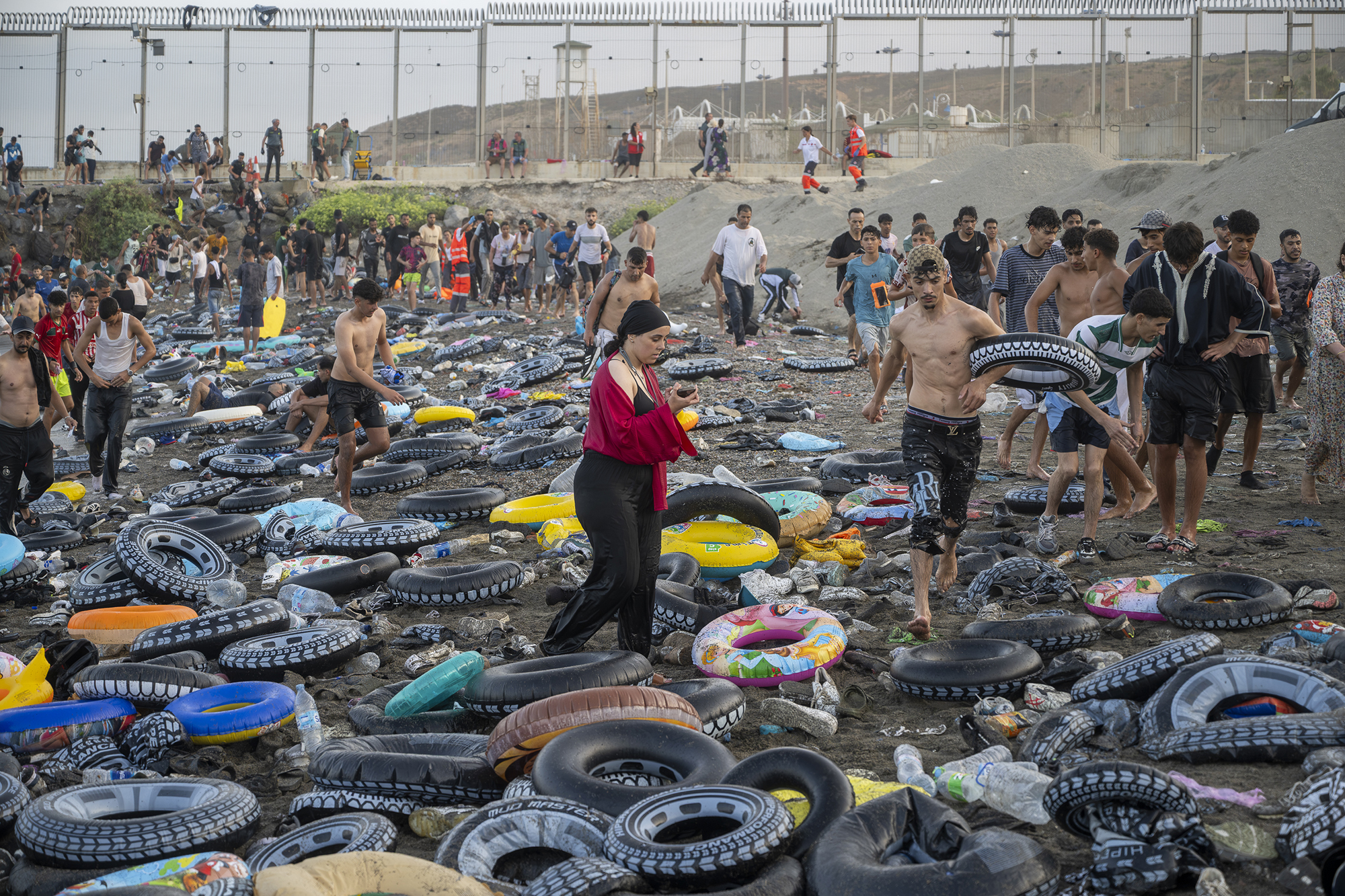
Migrants may have been used as a tool of political pressure against Spain (photo: Getty Images)
These tactics have long since been adopted by Europe's eastern neighbors as well. In Ukraine, the episode has largely faded from public memory, but in 2021 thousands of Arab migrants gathered on Belarusian territory in an attempt to cross into Poland. That crisis lasted for several weeks. Poland and the EU described Lukashenko's actions as an open attempt at political pressure and retaliation for Western sanctions.
The countries that control these migration routes pursue different goals. Morocco and Türkiye primarily seek to make European governments more willing to offer political and economic concessions.
Russia's objectives, meanwhile—often using Belarus as a proxy—may be far broader: triggering political and social instability within EU member states and boosting support for populist forces advocating greater isolationism.
For the EU, the ability to counter such tactics is a matter of the bloc's long-term survival. Unfortunately, Europe has yet to develop an effective response.
How migration crisis could fracture EU
Illegal migration remains one of the issues that concerns Europeans most. Because the EU's internal borders are largely open, migration pressure affecting one member state quickly becomes a challenge for the entire bloc.
Although the current EU leadership has taken a tougher stance on migration, the underlying problem remains unresolved, and member states are still divided over how to protect the bloc's external borders. The events in Ceuta highlighted those divisions.
This creates fertile ground for populist politicians. Leaders such as Viktor Orbán and Robert Fico have spent years building political support by portraying themselves as defenders against what they describe as "Brussels bureaucrats" determined to flood Europe with migrants. Similar messages have been echoed by once-opposition parties that have since become major political forces in Western Europe, including France's National Rally and Germany's Alternative for Germany (AfD).
Not coincidentally, many of these self-described "European patriots" have been linked to Russia. For years, Moscow has supported Euroskeptic movements through funding and information campaigns, helping fuel the very crises those politicians claim they can solve.
Although the EU has stepped up efforts to counter Russian influence since 2022, the campaign is far from over. Ukrainian Acting Foreign Minister Andrii Sybiha said that about 1,500 pieces of content about the Ceuta crisis were quickly spread across Europe through Russian propaganda networks such as Pravda and RT. The message was straightforward: "While hordes of migrants are taking over Europe, the EU is sending billions to Ukraine."
The EU could have demonstrated unity and resolve in defending its external borders. Instead, some governments sought to distance themselves from the crisis while trading accusations with one another. The Kremlin may not have initiated the events in Ceuta, but it clearly benefited from them, once again seeing evidence of the EU's internal divisions.
***
The immediate crisis in Ceuta has ended, but the turmoil of the past few days could have lasting consequences. Within the EU, populists have gained another opportunity to attack both national governments and European institutions. At the same time, the bloc's external adversaries have once again been reminded of its difficulty in responding quickly even to localized crises.
Europe needs to learn to respond to such challenges collectively. The EU is too interconnected for any member state's problems to remain someone else's concern—its challenges are shared, and so must be the response.
FAQ:
– Why did the situation in Ceuta cause such a strong reaction across the EU?
- Because the EU's internal borders are open, a problem affecting one member state can quickly become a challenge for the entire bloc. The sudden arrival of tens of thousands of undocumented migrants in a small city caused alarm and exposed the EU's lack of preparedness for a rapid, coordinated response.
– Why did European countries respond so differently?
- Instead of rallying behind Spain, some governments called for the suspension of the country's participation in the Schengen Area or announced plans to close their borders unilaterally. The episode underscored the absence of a truly unified EU migration policy and a common strategy for protecting the bloc's external borders.
– How did Russia factor into the situation?
- The Kremlin used its disinformation networks to spread thousands of misleading posts about the migration crisis, linking it to European support for Ukraine. Such narratives reinforce the messaging of local Euroskeptic and populist groups that oppose EU policies and seek to gain political support through calls for greater isolationism.