Seoul summons Ukrainian ambassador over North Korean POW scandal

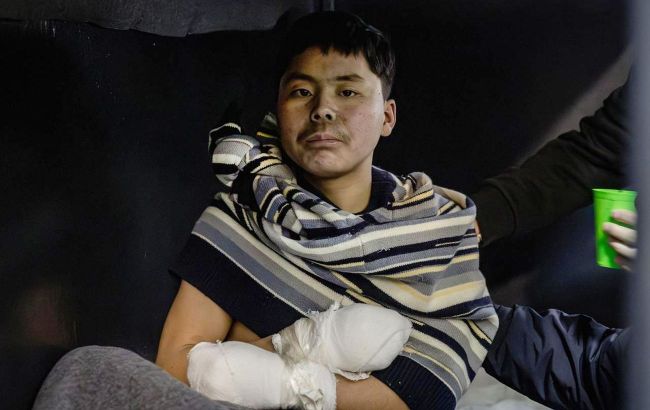 Photo: prisoners of war from North Korea (t.me/V_Zelenskiy_official)
On September 28, the Ministry of Foreign Affairs of South Korea summoned Ukraine’s Chargé d'Affaires, Andrii Vieshkin. The reason was Kyiv’s public disclosure of the transfer to Seoul of two captured North Korean soldiers, according to the South Korean agency Yonhap.
Park Yoon-joo, First Vice Minister of Foreign Affairs, conveyed Seoul’s tough position to the Ukrainian diplomat. The Korean side was most outraged by Kyiv’s denial of the existence of a confidentiality agreement.
According to Park, such actions seriously undermine mutual trust and harm the friendly relations between the two countries. Seoul is demanding official explanations and an apology from Ukraine.
Vieshkin promised to accurately convey the Korean side’s position to Kyiv.
South Korean President Lee Jae-myung and his office insist that Kyiv violated a non-disclosure agreement. According to them, secrecy was intended to protect the soldiers themselves from the danger that could threaten them after the disclosure. Seoul refers to international law and humanitarian principles.
The Ukrainian side denies the existence of such an agreement. Presidential Advisor for Communications Dmytro Lytvyn responded unequivocally to the claims about the deal.
Lytvyn wrote that there had been no such agreement and that the claim was untrue. He added that it would be wrong to hide where certain prisoners of war were being sent.
Zelenskyy spoke about the transfer of the prisoners on September 23, speaking at the UN General Assembly in New York. Ukrainian fighters took two North Korean servicemen prisoner in the Kursk region in January 2025. According to the president, one of them, realizing he would be captured, attempted suicide.
The next day, Lee Jae Myung accused Ukraine of disclosing a secret. He emphasized that Seoul and Kyiv had initially agreed on a confidential format for the transfer precisely due to the risk of such complications.
The prisoners expressed their desire to move to South Korea in letters back in December 2025. Under the Constitution of the Republic of Korea, residents of the North are considered citizens of the country, so Seoul is obliged to accept them if they wish. Until now, the Korean government has refused to confirm the arrival of the military personnel due to the threat to them and their families who remain in North Korea.