Scientists discover first-ever 'ghost galaxy' with zero stars

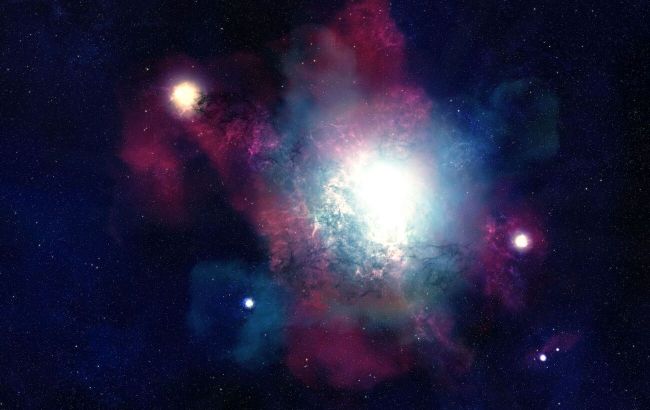 Scientists confirm absence of stars in Cloud 9 galaxy (photo: Pexels)
Scientists have obtained new evidence for the existence of the first confirmed "starless" galaxy in history. The object known as Cloud 9 contains enormous reserves of hydrogen and dark matter but emits no light, according to a study published on the arXiv preprint server.
What is known about Cloud 9?
The Cloud 9 object is located 14 million light-years from Earth, near the spiral galaxy Messier 94 (M94).
According to astronomers' estimates, this system contains a hydrogen cloud with a mass of approximately 1 million solar masses and dark matter with a mass of about 5 million solar masses.
.png)
Image of potential starless galaxy Cloud-9 taken by HiPERCAM camera (source: Trujillo, CC BY 4.0)
Astronomers explain that such reserves of matter typically serve as building blocks for stars. However, in the case of Cloud 9, observations from the Hubble Space Telescope showed a complete absence of stellar emission.
Most objects in the universe leave a light trail, whereas Cloud 9 does not emit light at all.
Observation results from the Gran Telescopio Canarias
To verify the hypothesis, a team of scientists led by Ignacio Trujillo from the Instituto de Astrofísica de Canarias used the HiPERCAM camera on the Gran Telescopio Canarias - the largest optical telescope in the world.
Scientists managed to capture the deepest images of the Cloud 9 region. Over 2.36 hours of integration time, they detected no emission whatsoever.
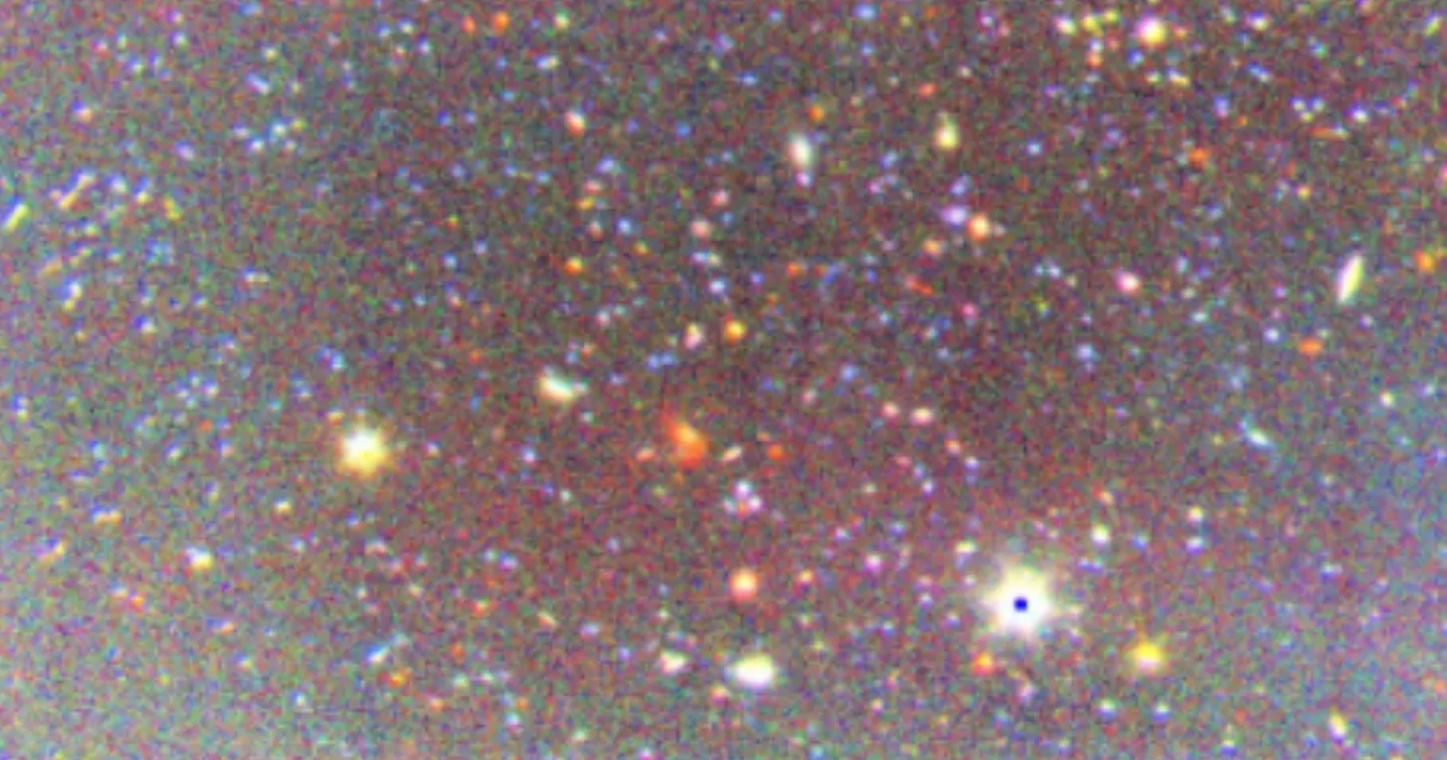
Zoomed-in image of starless galaxy Cloud 9 (source: Trujillo)
Reasons for the absence of stars in the galaxy
Cosmologists explain this phenomenon by the influence of background ultraviolet radiation that permeated the universe after the epoch of reionization.
The process unfolds as follows:
- Ultraviolet radiation heats the gas within dark matter halos of relatively low mass.
- Due to the high temperature, the gas cannot cool and compress effectively.
- Without the compression of matter, the process of star formation halts.
Simulations show that dark matter halos with a mass below 5 billion solar masses should remain starless. Cloud 9 fits these calculations.
Nevertheless, the object’s final status must be confirmed by further observations using the James Webb Space Telescope.
Even more interesting: