Russians traveling to Europe in large numbers: Dispute erupts in EU over visas

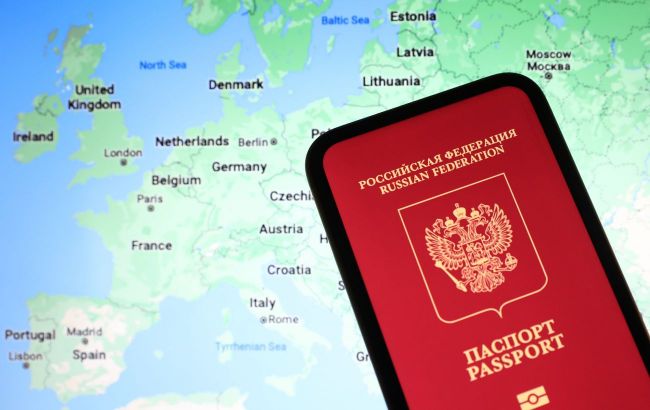 Illustrative photo: The number of Schengen visas issued to Russian citizens is increasing in the EU (Getty Images)
In EU countries, disputes have intensified over the growing number of Schengen visas issued to Russian citizens despite Russia’s full-scale war against Ukraine, according to Euractiv.
According to the outlet, in 2025, Russians submitted over 670,000 applications for Schengen visas, nearly 8% more than a year earlier. EU countries issued more than 620,000 visas to Russian citizens — a 10.2% increase compared to 2024.
More than 477,000 of them were tourist visas, accounting for about 77% of the total number of entry permits. Visits to relatives and friends ranked second, followed by business trips.
The most active issuers of visas to Russians are France, Italy, and Spain. These countries account for nearly three-quarters of all applications from Russian citizens.
In particular, France showed the largest increase in issued visas — more than 23% year-on-year.
The outlet noted that this situation has intensified disputes within the EU. Baltic and Northern European countries insist that Russians should not travel to Europe for tourism while Moscow is waging war against Ukraine.
According to Euractiv, discussions focused on the European Commission’s internal monitoring tool — the so-called "Schengen Barometer," which contains visa issuance statistics.
Several diplomats and officials familiar with the talks said that some capitals strongly objected when data on Russian visas appeared in the barometer.
Three diplomats noted that France was particularly concerned about the figures included in the document.
The disagreements became evident earlier this year when diplomats noticed that data on Russian visas had completely disappeared from a new version of the statistics.
Meanwhile, the European Commission reminded that after Russia’s full-scale invasion in 2022, the EU suspended its visa facilitation agreement with Moscow and recommended that member states take a stricter approach to applications from Russian citizens.
Earlier, Estonia called on EU countries to permanently close the Schengen area to Russian military personnel who participated in the war against Ukraine. Prime Minister Kristen Michal stated that such individuals could pose a security threat to Europe after the fighting ends.
Tallinn’s initiative has already begun to be discussed at the EU level. In March, the European Council instructed the European Commission to assess the possibility of introducing such restrictions.