Russian 'tank-turtle' destroyed by drones — Here's why it's significant

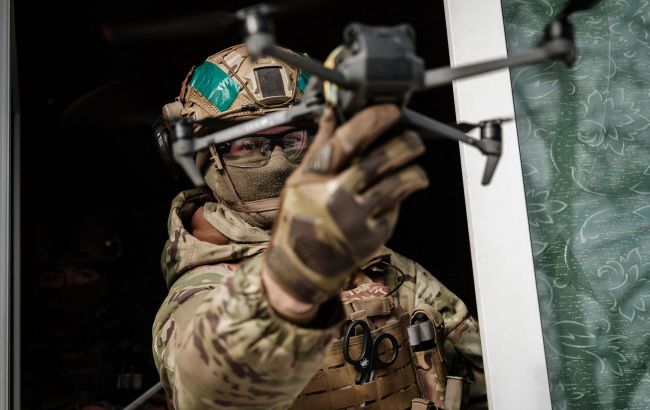 Photo: Drone forces hit Russian "tank-turtle" (Getty Images)
Soldiers from the 413th Regiment of the Drone Forces Raid struck a Russian "tank-turtle" on one of the hottest sectors of the front.
This was reported by a servicemember of the 413th Regiment of the Drone Forces Raid and weapons expert Ivan Kyrychevskyi of Defense Express on Facebook.
According to Kyrychevskyi, each Russian "tank-turtle" is particularly important as a target for several reasons. These tanks are limited in number within the Russian forces. The "turtles" are typically placed at the head of armored columns during mass mechanized assaults on Ukrainian Defense Forces positions.
Russian "tank-turtle" destroyed by drones — here’s why it’s significant pic.twitter.com/Mrwr7bodTu
— RBC-Ukraine (@NewsUkraineRBC) January 24, 2026
"This 'armor' welded onto the tank serves several functions at once — it protects against our drones and also provides some cover for the infantry riding on the tank’s hull. Optionally, 'tank-turtles' can be equipped with mine-clearing trawls," the expert explained.
In the video published by the servicemember, identifying the exact type of tank is not difficult, as all these "add-ons" distort the vehicle’s appearance. However, experience shows that for conversion into "tank-turtles," Russians typically use T-62 and T-72 tanks.
"At the same time, the very existence of 'tank-turtles' in the Russian army demonstrates the level of degradation reached by its armored units in the fourth year of the full-scale war. This is especially evident given the success of 'Raid' operators in hunting enemy armor," Kyrychevskyi noted.
According to him, the Russians developed 'tank-turtles' with infantry because, despite the supposed strength of the Russian defense industry, the occupiers still failed to produce a proper heavy armored personnel carrier — something like Israel’s 'Ahzarit,' which could provide reliable protection in modern warfare.
"'Tank-turtles' are not factory-made vehicles; they are assembled by Russian tank crews in the field from improvised materials. All these armor plates and other add-ons accelerate wear on the chassis and other components. The occupiers themselves admit that their 'tank-turtles' often break down on the way to deployment zones, causing attacks to fail," the expert added.
Ultimately, as Kyrychevskyi explained, the Russians were forced to weld armor onto the 'tank-turtles' because their touted defense systems, such as the Arena active protection system, proved ineffective.
"Taken together, each Russian 'tank-turtle' combines both a threat to our soldiers and a symptom of the Russian defense industry’s degradation," he said.
For context, as early as May 2024, National Guard forces destroyed a Russian 'tank-turtle' in the Lyman direction.
In July of the same year, Ukrainian forces destroyed a Russian T-62 tank in southern Ukraine. The 'tank-turtle' burned after a double strike.