Russian forces strike Zaporizhzhia with drones, setting residential area ablaze

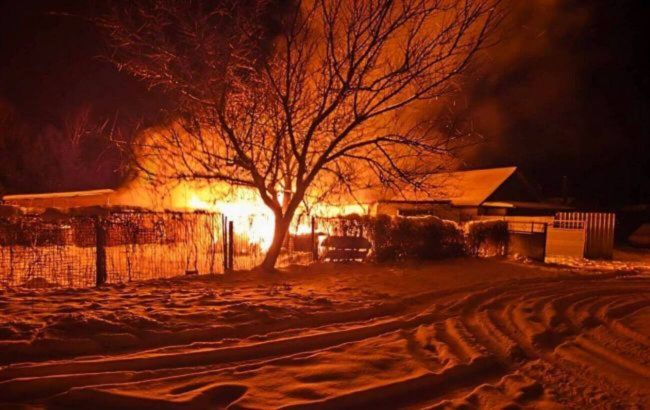 Photo: Russian forces launched attack drones on the region (Zaporizhzhia Regional Military Administration)
Russian forces attacked Zaporizhzhia overnight on January 18 with groups of attack drones. The strike triggered a fire in a residential area, according to Ivan Fedorov, head of the Zaporizhzhia Regional Military Administration.
"A fire broke out as a result of the Russian strike on Zaporizhzhia. A residential area is burning. Preliminary reports indicate no casualties," Fedorov wrote beneath photos of the fire.
Earlier, the head of the Regional Military Administration had repeatedly warned about drones launched by Russian forces toward different parts of Zaporizhzhia. In particular, UAVs were reported moving toward the Voznesenivskyi, Zavodskyi, and Dniprovskyi districts.
The Air Force of Ukraine did not report drone movements toward Zaporizhzhia. Their latest alerts concerned the threat of guided aerial bombs (KABs) at around 10:30 PM.
Late on January 17, Russian forces attacked the Zaporizhzhia district. The strike caused a fire, and the city of Vilniansk was plunged into a blackout. Fedorov said at the time that boiler houses were operating on generators, while centralized water supply was being maintained via backup power.
Earlier on the morning of January 17, Russian forces also attacked Zaporizhzhia with drones. The head of the Regional Military Administration reported a fire caused by that strike as well and published photos from the scene. An infrastructure facility was also damaged.
In recent weeks, Russian forces have intensified attacks on Ukraine, including on Zaporizhzhia. Critical infrastructure has increasingly been targeted in an apparent effort to trigger an energy collapse, leave civilians without water, heating, and electricity, and pressure Kyiv into concessions in peace talks. Territorial concessions, in particular, remain a key unresolved demand pushed by Moscow.