Russia upgrades Iskander missiles to strike Ukrainian bridges with greater precision, reports say

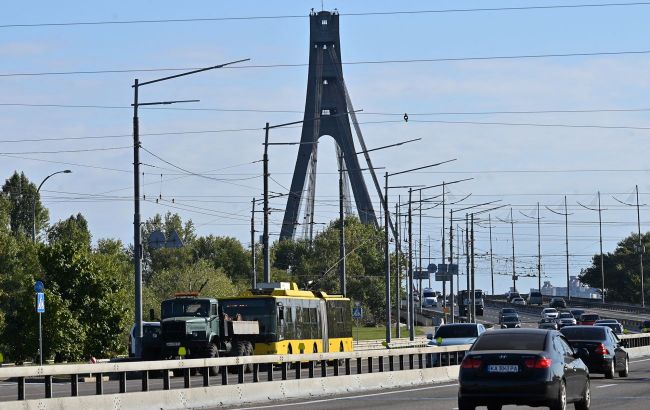 Photo: Russia has modernized its Iskander missiles to deliver more precise strikes on bridges in Ukraine (Getty Images)
Russian forces have upgraded their Iskander missiles by equipping them with optical and radar guidance systems for precision strikes on bridges. This is part of Moscow's strategy aimed at splitting Ukraine in half, reports The Telegraph.
The redesigned Russian ballistic missiles can now change direction mid-flight and hit targets with extraordinary precision.
The Russians have equipped their Iskander missiles with optical and radar guidance systems that allow the weapons to make last-second adjustments as they descend toward their targets.
According to Ukrainian presidential adviser Serhii "Flash" Beskrestnov, such guidance systems, which provide accuracy within a few meters, were used in recent strikes on bridges in Kyiv.
One Ukrainian official said Moscow's plan also involves disrupting the west-to-east electricity transmission system, which could leave millions of people without power.
The optical and radar guidance systems, which are believed to be a new development, scan the terrain using radar seconds before the warhead detonates, allowing the missiles to bypass Ukrainian electronic warfare systems.
According to Mauro Gilli, a professor of military strategy and technology, this could help solve some of the most serious tactical challenges Russia has faced since the beginning of the war.
"The thing about ballistic missiles is that they have a degree of error, because ballistic missiles have a parabolic trajectory. This means the flight path is guided by an onboard computer and when it reaches the given altitude, it positions the missile. But the last phase is usually pure gravity. Now, this has changed," he explained.
Gilli noted that the strikes did not destroy Kyiv's sturdy bridges, nor were they likely to do so. They disrupted bridge crossings and paralyzed public transportation, causing traffic jams that lasted for hours.
Meanwhile, attacks on energy infrastructure left a significant part of the city without electricity, heating, and water.
According to Maksym Beznosiuk, a research fellow at the GLOBSEC think tank, Russia is increasingly targeting bridges, while attempts to split Ukraine's energy system into two parts along the Dnipro River began as early as December last year.
"The Kremlin is pursuing what engineers call ‘islanding’, aiming to break Ukraine’s grid into isolated pockets that must operate independently and cannot redistribute power from functioning generation to support areas of demand. The pattern of strikes indicates Russia is trying to fragment the infrastructure that sustains the war effort. The aim is not just to bring the brutality of war into Ukrainian homes, but also to strike its war industries and support systems," he said.
Earlier, Ukrainian President Volodymyr Zelenskyy said that through its campaign of strikes on bridges and energy infrastructure, Russia is trying to divide Ukraine along the Dnipro River and make life more difficult for Ukrainians.