Russia tests new Geran-6 jet drone missile capable of reaching 1,000 km/h

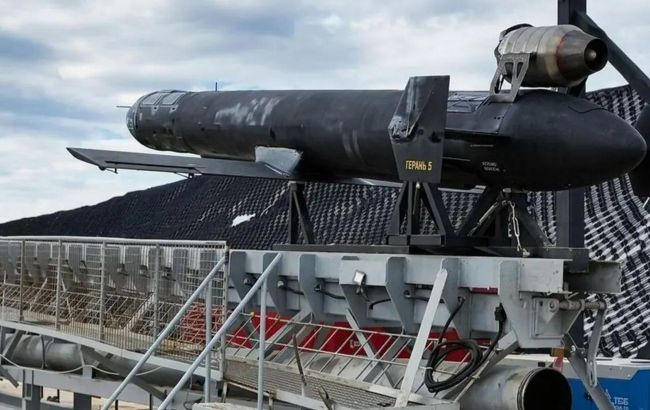 Photo: Russian Geran (Russian media)
Russia is conducting experimental tests of the Geran-6 jet-powered drone, which can reach speeds of up to 1,000 km/h. Because of their speed, interceptor drones have difficulty destroying them effectively, Fedir Venislavskyi, a member of parliament's Committee on National Security, Defense and Intelligence, said in an interview with RBC-Ukraine.
According to Venislavskyi, the aerial attack systems Russia is currently using, including the Geran-5 and Geran-6, are no longer similar to the drones used at the beginning of the war. He described them as cruise missiles. Ukraine was the first to demonstrate this approach, he said, and the president called it a drone missile. The lawmaker noted that Russia is now significantly expanding its use of such aircraft.
Jet-powered Shaheds and other jet-powered drones fly at speeds ranging from 500 to 1,000 km/h, just like cruise missiles, he explained. This makes them difficult to counter even with jet-powered interceptors. If an aircraft is flying at around 800 km/h, the interceptor must move at least as fast. Under these conditions, Venislavskyi said, kinetic destruction of targets is extremely difficult to carry out effectively.
He identified air defense systems, namely missile technologies, surface-to-air and air-to-air missiles, as the most effective means of countering jet-powered targets. This could be an aircraft shooting down jet-powered Shaheds with missiles or a ground-based air defense system.
Interceptor drones have also achieved good results. They are not yet being deployed on a large scale because this is an extremely complex technological task. Venislavskyi noted that Ukrainian manufacturers are constantly demonstrating new interceptors, which are undergoing testing. He believes they will significantly improve the rate at which aerial targets are destroyed.
Speaking about the Geran-6, the lawmaker said the information came from Ukrainian intelligence. According to this information, Russia is currently conducting experimental tests of the aircraft. It will be capable of reaching speeds of up to 1,000 km/h and carrying a fairly large warhead.
"We must be prepared for this," Venislavskyi stressed.
According to him, this highlights the importance of strengthening Ukraine's air defenses, developing surface-to-air and air-to-air missiles, and making use of partners' capabilities to increase the number of such missiles.
In early November, presidential adviser Serhii "Flash" Beskrestnov reported that an electronic warfare dome had been completed over Kyiv, disrupting the MESH radio communications of jet-powered Shaheds. According to him, the operation forced the enemy to pause and upgrade its Shaheds.
Tymofii Yurkov, co-founder of Contra-Drone, said on RBC-Ukraine's TSE BAZA podcast that almost all jet-powered Shaheds are currently being shot down by aircraft or suppressed by electronic warfare systems. He also noted that at speeds of 650–700 km/h and above, interceptor drones would, in his opinion, become less effective, although they remain relevant against non-jet-powered drones.