Russia strikes Ukraine's energy infrastructure despite ceasefire: ISW reveals Kremlin's strategy

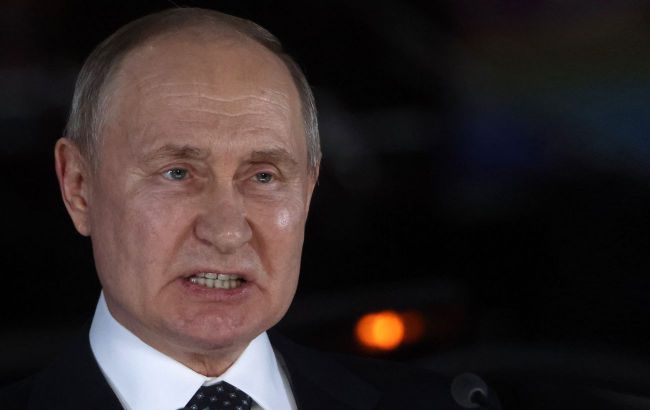 Photo: Russian leader Vladimir Putin (Getty Images)
Ukraine is ready for a mutual energy ceasefire, but the current terms could give Russia an advantage and leave Ukrainian power plants at risk, according to the Institute for the Study of War (ISW).
According to ISW, as of October 12, Ukraine and Russia had not reached an agreement to halt strikes on energy infrastructure. Despite discussions about a possible ceasefire, Russian forces continued to attack Ukrainian energy facilities.
Overnight on October 12, Russian strikes hit a thermal power plant west of Kharkiv, gas production facilities in the Kharkiv region, and an oil depot in Sarny, Rivne region.
Ukrainian President Volodymyr Zelenskyy also reported that Russian forces attacked six Ukrainian energy facilities on October 12 alone.
At the same time, Ukrainian forces did not strike Russian energy infrastructure that night.
Zelenskyy said Ukraine was ready for a full energy ceasefire. However, Kyiv expects Moscow to act in the same way and formally agree to the arrangement.
What Trump is proposing
On October 11, an anonymous White House official told Axios that US President Donald Trump’s statement about an energy ceasefire referred only to a potential agreement. At that point, no formal agreement had been reached between Ukraine and Russia.
According to the US administration official, the initial proposal calls for a moratorium on strikes against oil refineries. The scope could later be expanded to protect other energy infrastructure facilities as well.
The limited scope of the proposal is precisely what concerns ISW. Analysts believe that, under the current terms, it could benefit Russia significantly more than Ukraine.
Why the ceasefire could work in Russia’s favor
Russia has dozens of operational oil refineries, while Ukraine has only one. A moratorium on strikes against refineries could therefore significantly restrict Ukraine’s ability to attack Russian energy infrastructure without providing equivalent protection for Ukrainian facilities.
According to ISW, the proposed terms could allow Russia to continue striking Ukrainian power plants during the winter of 2026–2027. This is because the initial version of the agreement would protect oil refineries rather than all energy infrastructure.
As a result, Ukraine risks accepting restrictions on attacks against sensitive Russian energy facilities while Russian forces remain able to continue their campaign against Ukraine’s energy system.
ISW emphasized that, under such a scenario, the ceasefire would not provide Ukraine with equivalent benefits. Instead, it could give Moscow additional opportunities to continue attacking Ukrainian energy infrastructure ahead of and during the winter.
On October 11, US President Donald Trump claimed that Ukraine and Russia had reached an agreement on an “energy ceasefire.” According to him, both sides were supposed to stop striking energy infrastructure.
However, Ukrainian President Volodymyr Zelenskyy denied that an agreement had been reached with Moscow. At the same time, he stressed that Kyiv was ready to support a ceasefire if Russia also halted its attacks.
The White House later clarified that the initial proposal concerned a moratorium on strikes against oil refineries. Protection for power plants and energy grids could be considered at a later stage.