Russia stages space provocation as its satellite comes dangerously close to Ukraine partner's spacecraft

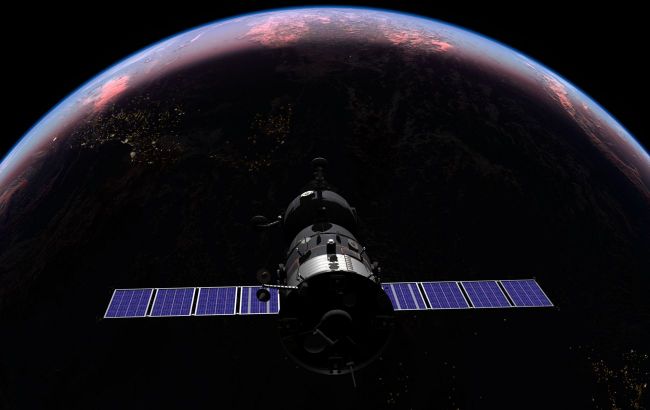 Photo: A satellite (Getty Images)
The Russian military satellite Kosmos-2612 came within 26 meters of ICEYE-X36. ICEYE works with Ukraine and provides satellite imagery for intelligence purposes, according to a report from the Center for Strategic and International Studies (CSIS) and data from the satellite monitoring service satellitemap.space.
According to the service, at 02:06 Coordinated Universal Time (UTC) on October 19, the Russian satellite was approximately 640 meters behind ICEYE-X36 and two kilometers above it. At 16:07 UTC, the distance between the spacecraft had narrowed to 26 meters.
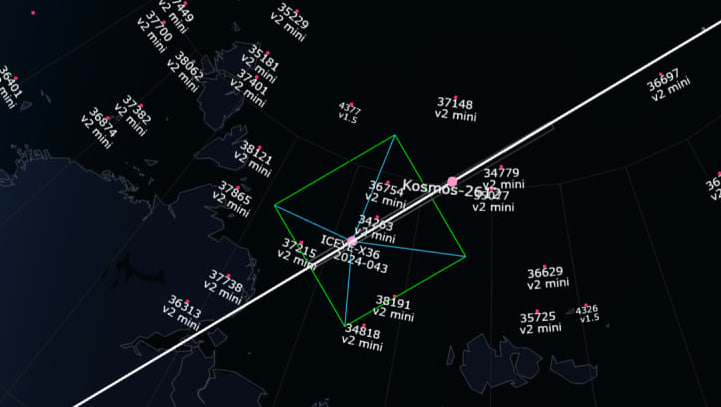 Photo: The Russian satellite Kosmos-2612 approaches the ICEYE-X36 satellite in orbit (screenshot from the satellitemap.space map).
How the Russian satellite ended up near ICEYE-X36
According to CSIS, in late September 2026, Kosmos-2612 began a series of maneuvers that allowed it to return to the same orbital plane as ICEYE-X36 and subsequently approach its altitude.
On October 12, the Russian spacecraft changed its velocity by approximately 27.9 meters per second. This allowed it to adjust its orbit to an altitude of about 555 kilometers, almost the same as ICEYE-X36.
According to the latest data from satellitemap.space, Kosmos-2612 is at an altitude of about 547 kilometers above Earth, while ICEYE-X36 is at an altitude of about 545 kilometers.
Why satellites approach each other in orbit
Changing an orbit requires significant amounts of fuel. To change its inclination, a satellite must substantially adjust its velocity.
Once a spacecraft enters the same orbital plane, it can approach another satellite while using less fuel for subsequent adjustments.
Such maneuvers can make it possible to observe another spacecraft in detail and study its design. Under certain circumstances, close proximity can also create opportunities to interfere with a satellite's operations.
However, the close approach alone does not prove that Russia intends to damage ICEYE-X36 or interfere with its operations. Additional data is needed to establish the purpose of the maneuvers.
ICEYE-X36 is a commercial radar satellite. Such spacecraft can capture images of Earth's surface regardless of lighting conditions and through cloudy weather. ICEYE data is used for intelligence purposes, including as part of the company's cooperation with Ukraine.
Ukraine has recently experienced problems with Starshield, the military version of the Starlink satellite communications system.
On the night of October 14, terminals began losing connectivity when moving at speeds exceeding 160 km/h. Ukrainian military personnel reported the disruption of certain missions, including those involving high-speed interceptor drones.