Russia sends teachers to calm angry drivers waiting in gas lines

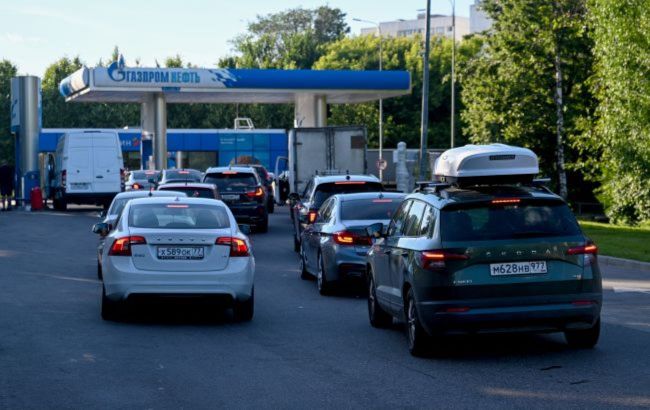 Russian teachers stand watch at gas stations amid the fuel crisis (photo: Getty Images)
A growing fuel crisis in Russia, fueled by Ukrainian strikes on oil refineries, is forcing regional authorities to resort to unusual measures, the Nastoyashchee vremya (Current Time) media outlet reports.
Teachers calm drivers
The administration of the Dinsky district in the Krasnodar territory, Russia, has instructed teachers to monitor gas stations.
According to the instruction, teachers are expected to spend part of their vacation at gas stations helping maintain order. In return, they are offered free tea and coffee.
The order sparked outrage in local online communities, including among teachers themselves.
The Telegram channel Antijob.net, which tracks abusive employment practices, quoted one teacher as saying: "We're young teachers, most of us don't even weigh 50 kilograms, and we're supposed to calm down angry people at gas stations. It's unpaid and mandatory—or there will be questions, and God forbid, dismissal."
The district education department did not deny that teachers were being assigned to the stations but offered a different explanation. Officials claimed the teachers were volunteering—and that only men were participating.
"No one is forcing anyone to stand watch, especially not women. Male teachers volunteer because the situation at gas stations affects them personally as well. They are participating entirely on a voluntary basis. There are no women among them," the department told the outlet Zhivaya Kuban (Live Kuban).
Officials in Russia's Pskov region are also looking for "volunteers" to monitor Surgutneftegaz gas stations.
Their task is to inform drivers about fuel rationing rules and help manage waiting lines. The announcement does not specify whether the volunteers will receive any compensation. At Pskovnefteprodukt gas stations, volunteer patrol groups are already performing similar duties.
Gasoline distributed by odd and even license plates
Regional authorities are also introducing other unconventional methods of fuel rationing. In Karelia, Mordovia, Oryol, Nizhny Novgorod, Lipetsk, Pskov, Astrakhan, and Kirov regions, residents have begun receiving text messages announcing an odd-even fueling system based on vehicle license plate numbers.
Authorities in the Irkutsk region have proposed introducing an online reservation system for gas stations to reduce queues. In Perm, organizers have filed notice for a public protest over gasoline shortages, although no other organized demonstrations have been reported so far.
Scale of crisis on social media
The Novaya Gazeta Europe (New Newspaper Europe), working with the Vox-Harbor project, found that since May 1, 2026, Telegram users have published 6,600 posts and nearly 39,700 comments about Russia's fuel crisis.
The first spikes in discussion occurred on May 6, 12, and 22, following attacks on the oil refineries in Nizhny Novgorod, Yaroslavl, and Perm.
The conversation intensified on May 29, when authorities in occupied Crimea limited sales of AI-95 gasoline to 20 liters per customer per day. The largest wave of discussion began on June 18 after the biggest drone attack on Moscow since the start of the war.
Since then, Telegram has averaged around 350 unique posts per day on the topic.
According to users' comments, the fuel shortage is being felt most acutely in the Russian-occupied territories of Ukraine, Moscow and the surrounding region, and southern Russia.
The annexed Crimea tops the list, followed by Moscow, the so-called Donetsk People's Republic, the Krasnodar territory, and the Rostov and Moscow regions. East of the Ural Mountains, discussions are most active in the Zabaykalsky territory, the Irkutsk region, and the Republic of Tyva.
Response by Moscow
The Russian government has banned exports of gasoline, diesel fuel, and jet fuel. Deputy Prime Minister Alexander Novak announced the start of fuel imports and plans to boost production by increasing output of lower-grade petroleum products.
Reuters reported that Russia's gasoline production is currently meeting only about 65% of seasonal demand.
Earlier reports said gasoline production in Russia had fallen to 65% of its normal seasonal level, while Ukrainian drone strikes had disabled about 40% of the country's oil refining capacity.
The media previously reported that attacks on Russian oil refineries had severely disrupted the country's fuel industry, cutting gasoline production by 25% and prompting fuel restrictions in 75% of Russia's regions.