Russia's new tactics accelerate its 2025 offensive, ISW analysis finds

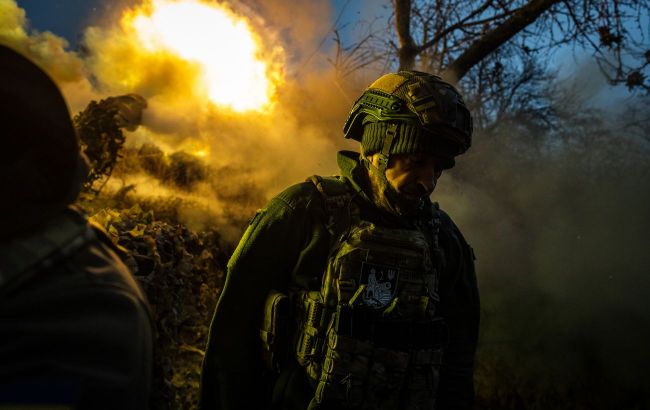 Photo: Russia's new tactics accelerated the offensive in 2025 (Getty Images)
Russian troops accelerated their offensive in Ukraine in 2025 thanks to new tactics, according to the Institute for the Study of War (ISW).
According to analysts, in 2025, Russian troops increased their average speed of advance thanks to a new operational model, supported by technological adaptations and a change in attack tactics.
ISW analyzed the evidence and concluded that Russian troops captured 4,831 square kilometers of Ukrainian territory and recaptured approximately 473 square kilometers that Ukrainian troops had captured in the Kursk region in 2025. Russian conquests in Ukraine amounted to 0.8% of Ukraine's territory.
In 2024, Russian troops captured 3,604 square kilometers of Ukrainian territory.
Data from the General Staff of the Armed Forces of Ukraine show that Russian troops suffered 416,570 casualties during 2025, averaging 78 soldiers per square kilometer of captured territory in Ukraine and the Kursk region.
The average daily rate of advance of Russian troops in 2025 was 13.24 square kilometers per day, exceeding the average daily rate of 9.87 square kilometers per day in 2024.
However, the rate of advance of Russian troops during 2025 was not stable. The highest rate of advance by Russian troops was recorded in November—20.99 square kilometers per day—but this peak came after one of the slowest months of 2025—8.8 square kilometers per day in October—and subsequently slowed to 15 square kilometers per day in December.
Russian troops began to employ a new operational model based on a sustained campaign of aerial blockade of the combat space, tactical blocking measures, infiltration missions, and mass attacks by small groups, which allowed Russian troops to advance in the directions of Pokrovsk, Oleksandrivka, and Huliaipole in the fall of 2025.
Russian forces began to achieve some success using drones to jam Ukrainian ground communication lines in early spring 2025.
In April and May 2025, the Russian military began deploying its elite drone operators from the Rubicon Advanced Unmanned Technology Center, elements that are largely responsible for Russia's operational successes across the front lines.
Russian technological adaptations also supported Russia's drone campaign. Russian troops increased production of fiber-optic drones, which are more resistant to Ukrainian electronic warfare jamming, and increased their range from approximately seven kilometers in early spring 2025 to about 20 kilometers in summer 2025.
Russian forces have also introduced so-called mothership drones that can carry and extend the range of FPV drones and significantly increase the range of Russian drone strikes in the rear.
Russia's recent technological adaptations have further increased the range of Russian fiber-optic drones to 50-60 km.
On December 30, Commander-in-Chief of the Armed Forces of Ukraine Oleksandr Syrskyi noted that the concentration of Russian fiber-optic drones with a range of over 20 km in the direction of Siversk allowed Russia to capture Siversk.
The use of fiber-optic drones by Russian troops has also improved their ability to counter Ukrainian electronic warfare in forested areas such as the Serebrianskyi Forest, where radio-controlled drones have difficulty operating.
Russian forces also changed their tactical methods of attack, moving away from highly exhausting infantry-led offensive operations in June 2025 to tactics of infiltration and raising their flags to achieve and falsely claim successes across the front.
This change in tactics allowed Russian forces to advance more quickly in 2025, but they continue to suffer heavy losses for little gain.
Russian advances in 2025
The Russian military command in 2025 focused primarily on capturing the rest of the Donetsk region and creating a buffer zone in the north of Sumy and Kharkiv regions, but failed to achieve these goals.
On June 5, Colonel Pavlo Palisa, deputy head of the Office of the President of Ukraine, stated that Russia intended to capture and occupy the entire territory of the Donetsk and Luhansk regions by September 1, 2025, and to create a buffer zone along Ukraine's northern border with Russia by the end of 2025. Russian troops failed to accomplish either of these tasks.
In 2025, Russian troops focused on capturing Pokrovsk, advancing in the western part of the Donetsk region, and attacking the southeastern part of the Dnipropetrovsk region.
In September 2025, Russian troops entered Pokrovsk and, as of December 2025, had captured 67.63% of the city.
At the end of January 2025, Russian troops captured Velyka Novosilka, intensified their efforts in the direction of Oleksandrivka and Huliaipole, and in November 2025 began a noticeable advance towards these cities.
In early December 2025, Russian troops began operations in Huliaipole.
In August 2025, Russian sabotage and reconnaissance groups penetrated toward Dobropillia, but the Russian military command was unable to reinforce the breakthrough and turn tactical successes into an operational breakthrough, and Ukrainian troops subsequently recaptured approximately 70 square kilometers of territory seized by the Russians.
Russian forces also continued attempts to encircle Ukraine's fortified belt from the northeast and southwest. Intense Russian offensive operations northeast of Sloviansk led to the advance of Russian forces to Lyman and the likely capture of Siversk in December 2025.
Russian forces continued to attempt to encircle the fortified belt from the southwest and by August 1, 2025, had completed the capture of Toretsk, spending 14 months advancing approximately 6.4 km from the southeastern outskirts of Toretsk to the northwestern outskirts of Toretsk, and in October 2025, they began attempts to capture Kostiantynivka.
Russian troops completed their operation to drive Ukrainian forces out of the Kursk region in March 2025 and launched a largely unsuccessful offensive in the north of the Sumy region, intending to create a so-called buffer zone.
Russian troops also continued their efforts to create a buffer zone along the international border in the north of the Kharkiv region, and in July 2025, launched an offensive on Velykyi Burluk. However, this sector of the front remained largely inactive until December 2025.
In the summer of 2025, the Russian military command intensified its efforts to capture Kupiansk, but despite the Kremlin's statements, it was unable to complete the capture of the city, and in December 2025, Ukrainian troops recaptured most of Kupiansk.
Earlier, the Armed Forces of Ukraine explained the change in Russian tactics in Vovchansk.
Russia is also trying to establish the production of unmanned naval boats. The Ukrainian Navy says it is ready for this threat.