Russia prepares large-scale provocation with casualties to disrupt peace talks - Ukrainian intelligence

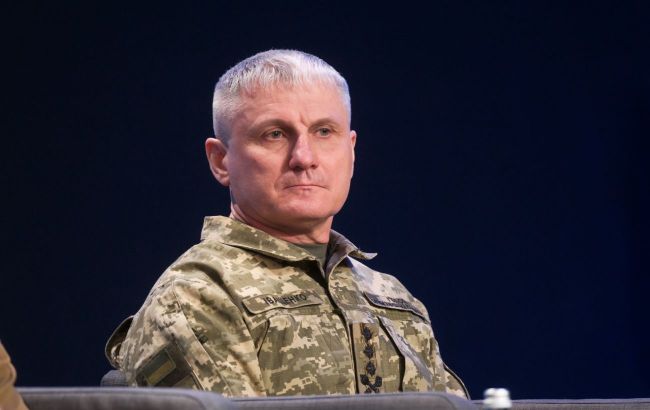 Head of the Foreign Intelligence Service of Ukraine Oleh Ivashchenko (photo: Vitalii Nosach, RBC-Ukraine)
The Kremlin is preparing a large-scale provocation with human casualties as part of an ongoing operation to derail peace talks mediated by the United States, the press service of the Foreign Intelligence Service of Ukraine reported.
"The operation in question is comprehensive in nature. After the so-called attack on the residence of Russian President Vladimir Putin, we are recording the Kremlin's dissemination of new fabricated information pretexts to prepare Russian and foreign audiences for further escalation," the Foreign Intelligence Service said.
Intelligence services assess with high probability that there will be a transition from manipulative influence to an armed provocation by Russian special services with significant human casualties. The expected timeframe is on the eve of or during Christmas, according to the Julian calendar, on January 7.
The location of the provocation may be a religious site or another facility with high symbolic significance, both in Russia and in the temporarily occupied territories of Ukraine.
To fabricate evidence of Ukraine's alleged involvement, plans include using debris from Western-made attack drones, which would be delivered to the site of the provocation from the line of combat.
"Exploiting fear and carrying out terrorist acts with human casualties under a false flag fully corresponds to the operating style of Russian special services," the Foreign Intelligence Service noted.
According to intelligence data, the Putin regime has repeatedly used this tactic inside Russia, and this same model is now being exported abroad, which is indirectly confirmed by public statements from senior Russian officials.
"We call on the media to question and carefully verify materials published by the Kremlin and not to spread Russian fakes," the Foreign Intelligence Service emphasized.
Russia's statement
Recently, Russian Foreign Minister Sergey Lavrov claimed that Ukraine had allegedly carried out a drone attack on the state residence of Russian President Vladimir Putin in the Novgorod region on the night of December 29, referring to the residence in Valdai.
According to Lavrov, Russian forces allegedly destroyed 91 Ukrainian drones.
At the same time, Russia's Defense Ministry said it had intercepted 89 drones, in addition to another 23 across various regions, including 41 over the Novgorod region.
Thus, the fate of about 50 drones remains unknown.
Two days after the statements about the alleged Ukrainian drone attack on Putin's residence, Russia's Defense Ministry even released a map of drone routes, which the Foreign Intelligence Service of Ukraine called fake.
Ukrainian President Volodymyr Zelenskyy denied Russia's accusations regarding the alleged attack on Putin's residence and warned that such statements could be preparation for new strikes on Ukraine.
Ukraine's Foreign Ministry emphasized that the story of the attack is a fake that Moscow is using to undermine peace initiatives involving Kyiv and Washington.
More details about the alleged attack on Putin's residence, Ukraine's reaction, the position of Ukraine's Foreign Ministry, and discrepancies in statements by Russian authorities can be found in the RBC-Ukraine report.