Russia finds workaround to boost crude oil exports, media reports

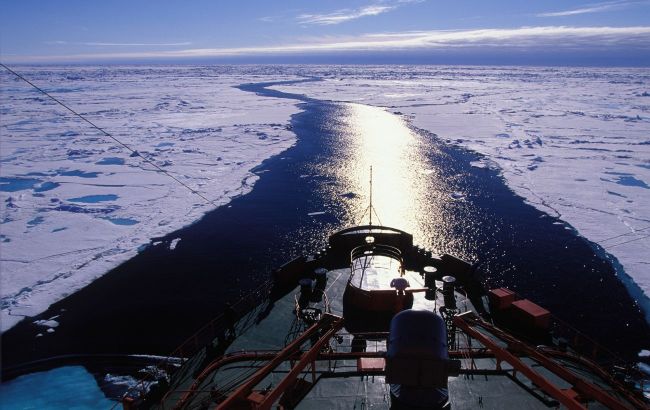 Photo: Russian icebreaker in the Arctic (Getty Images)
The aggressor country is increasing crude oil shipments through the Arctic Ocean. Export volumes are growing, Bloomberg reports.
Russia is betting on the Arctic
Russia has stepped up crude oil shipments through the Arctic to achieve several goals:
- Maintain historically high export rates,
- Reduce delivery times,
- Avoid any risks linked to the Red Sea, which is threatened by Houthi attacks.
Russian crude oil exports have remained above 4 million barrels per day for the fifth consecutive week, according to tanker-tracking data compiled by Bloomberg.
Which tankers are involved:
- The tanker Breeze is already sailing through the Laptev Sea, having covered more than half of Russia’s Arctic coastline. It was escorted by a nuclear-powered icebreaker for part of the route.
- Five more vessels have gathered near the Russian port of Dikson, where two icebreakers are clearing a path for them. They are located 1,000 miles east of Murmansk and Primorsk, where they were loaded.
The outlet noted that Russia’s July northern tanker transits began earlier in the season and appear set to exceed previous years’ levels. Last July, only one tanker used this route.
Why the Arctic route
Faster deliveries will allow vessels to return more quickly and pick up their next cargoes.
The vessel movements will also help ships avoid potential tensions in the Red Sea, where Yemen’s Houthis have declared a naval blockade of Saudi Arabia, the publication wrote.
Several Russian shadow fleet tankers have previously come under attack while passing near Yemen.
In 2023, Russia redirected around 500,000 barrels of crude oil per day that had previously been supplied to Europe via pipelines to maritime routes.
Egypt becomes a transit hub for Russian oil
Egypt is becoming a small but important destination for Russian crude oil.
This year, at least 15 Urals crude shipments have been delivered to the Mediterranean port of Mersa el-Hamra. Traffic has increased sharply in recent months.
Total Russian crude oil shipments for the week: by July 26, around 39 tankers had loaded 28.47 million barrels, according to vessel-tracking data and port agent reports cited by the publication.
Russia is trying to protect its vessels in southern ports from attacks, although it publicly claims there is no problem.
Russian authorities have ordered the Rubicon drone center to do everything possible to protect the shadow fleet in the Black Sea and the Sea of Azov.