Russia expands system to track citizens’ movements

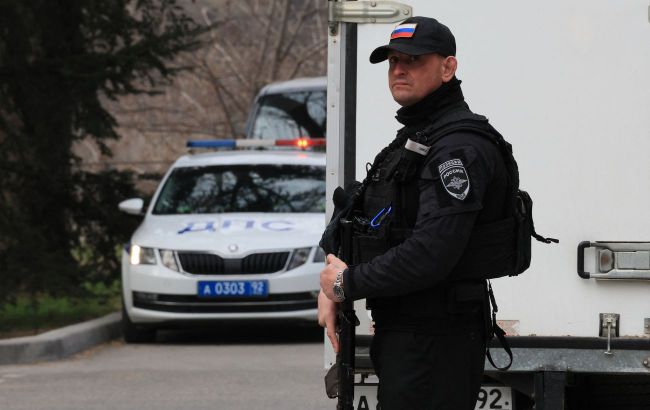 Photo: Russian police (Getty Images)
The Russian authorities plan to expand the system for collecting data on citizens' movements both domestically and abroad. A new draft order from Russia's Ministry of Transport provides for the transfer to the state of not only planned but also actual information on trips by all types of long-distance transport, reports Vyorstka.
In general, Russia has had a system of automated centralized databases of personal data of passengers and vehicle crews in place since 2024. Carriers and companies involved in ticket booking already transmit to these databases information about ticket purchases, refunds, reissuance, passenger boarding and disembarkation, as well as the departure or cancellation of transport departures.
For aviation and rail transport, this data must be transmitted within 15 minutes of appearing in carriers' systems. For road, maritime, and inland water transport, the deadline is set at up to 30 minutes.
Currently, these are primarily planned information regarding transport departures and passenger boarding.
What the new order will change
The new draft order explicitly stipulates the need to transmit not only planned but also actual data on trips. This will apply to both scheduled and charter flights.
For air travel, additional information on transfers and baggage parameters will be transmitted. In addition, each trip on all types of transport will be assigned a unique code.
What personal data of Russians enters the system
The automated databases will continue to receive a significant volume of personal and technical information, including:
- Phone numbers and email addresses;
- Passenger login names from their personal accounts;
- IP addresses and port numbers from which information was transmitted during ticket booking;
- Data on bank cards and accounts used for payment.
Thus, the system will allow information about a specific person to be linked not only to their ticket but also to the data left during its purchase.
Data could be used by law enforcement
Lawyer Anastasia Burakova believes that the updated rules could be used by Russian law enforcement for operational investigative activities and as part of the FSB's counterterrorism measures.
In particular, she said, the system could be used to search for specific individuals.
Burakova noted that after the order is updated, obtaining information on citizens' movements will become simpler and less expensive.
More news about Russia
Why Russians endure rather than revolt: The Atlantic explores a culture of patience
Kremlin’s top state bank predicts Russia could lose war of attrition