Putin envoy, German AfD plan meeting over Russian gas supplies — Reuters

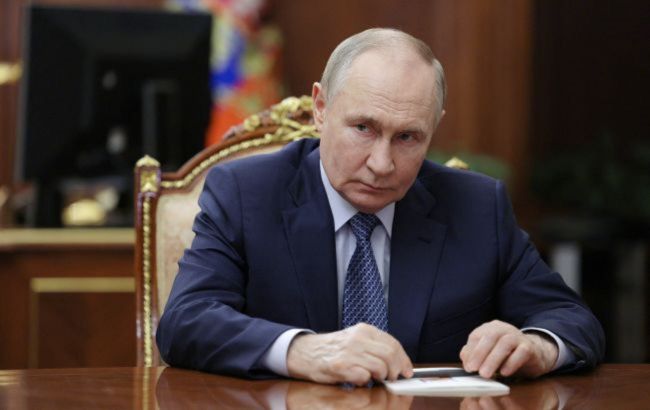 Vladimir Putin (photo: Getty Images)
Envoy to Russian President Vladimir Putin and Germany's far-right Alternative for Germany (AfD) party are preparing to meet to discuss restoring Russian gas supplies to Germany, according to Reuters.
Who plans to meet and when
Sources cited by the outlet say the talks, which could take place in early 2027, are expected to involve Kirill Dmitriev, head of Russia's sovereign wealth fund, as well as AfD co-leaders Alice Weidel and Tino Chrupalla.
The talks would be possible only if Ukraine and Russia agree to a peace deal beforehand.
Israel, the United Arab Emirates or India could be chosen as the venue for the summit.
The party's main goal is to offer Germans a return to cheap energy supplies from Russia.
The organizers also hoped to involve US representatives Steve Witkoff and Jared Kushner in discussions about restoring Nord Stream pipeline operations.
However, the United States has already said it was not informed about the summit.
Reaction from German politicians
According to the outlet, the idea of restoring supplies from Russia has sparked outrage among German government officials and lawmakers.
"Germany cannot become dependent on Russia again. We cannot repeat the mistakes of the energy crisis. It cost us €50 billion. We cannot want to go back to that. It would be treason," Green Party lawmaker Michael Kellner said.
"Russia uses energy, especially Nord Stream, as a hybrid weapon for military purposes. Reopening Nord Stream would be a disaster for European security and isolate Germany," Christian Democrat lawmaker Roderich Kiesewetter said.
Cooperation of AfD with Russia
This is far from the first time the German far-right Alternative for Germany (AfD) party has sought to establish direct contact with the Kremlin and the Russian energy giant.
In particular, AfD lawmaker Markus Frohnmaier met with Gazprom CEO Alexei Miller in St. Petersburg and called for the Nord Stream pipeline to be brought back online.
In addition, Russia continues to look for other ways to preserve its gas contracts in Europe and around its borders. Türkiye and Russia are currently discussing extending long-term gas supply agreements beyond 2026.
At the same time, both the European Union and the German government view any attempts to restore energy dependence on Moscow extremely critically, stressing that Germany has completely phased out Russian energy resources and that a return to the previous arrangements is impossible.