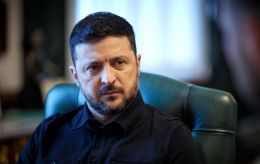
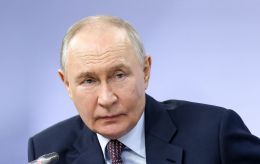
President Zelenskyy defines red lines, stating neutrality is not open for discussion


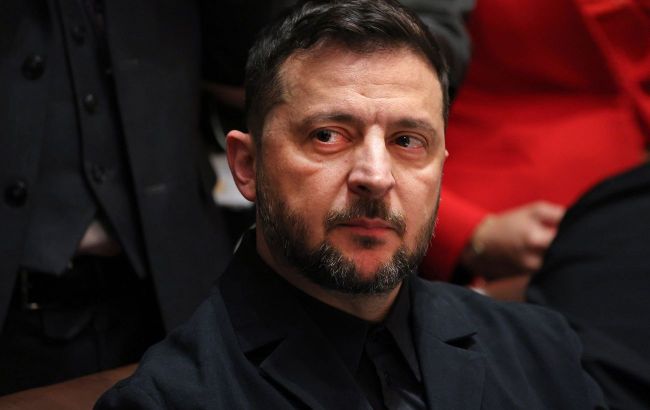 Volodymyr Zelenskyy (photo: Getty Images)
Ukrainian President Volodymyr Zelenskyy discussed the results of negotiations in Oslo, discussions on US proposals to Russia, security guarantees, and outlined Ukraine’s position on territories and sanctions against Russia.
Read Zelenskyy’s key statements in his conversation with Alla Mazur in the RBC-Ukraine material below.
On intelligence, Starlink, and the outcomes of the Oslo meeting
Zelenskyy described the conversation in Oslo as productive and substantive. According to him, intelligence regarding ballistic strikes is operating at 100%, and on Saturday at 5:20 am Kyiv time - for the first time after a long period of "emotional dialogue" between Ukraine and the US—Starlink resumed operations.
Due to the "emotionality of the dialogue," Ukraine faced three main challenges:
- Air defense deficit;
- Starlink restrictions;
- Limitations on intelligence sharing from the US.
"I am grateful to the Americans and our team that two of these issues – intelligence and Starlink/Starshield – have been resolved as of today. The issue of air defense remains," the president emphasized.
Furthermore, following the negotiations in Oslo, the American side held a meeting in St. Petersburg. The Americans confirmed that Putin agreed to a meeting of groups in November and that both sides (Ukraine and Russia) are ready for a trilateral meeting. It is also important for Ukraine that Europe be represented.
On Witkoff’s document and Ukraine’s "red lines"
Commenting on the developments by the American side, which were delivered to Putin (Witkoff’s document), Zelenskyy noted that Ukraine cannot discuss a neutral status for the state or limitations on the Ukrainian army.
The head of state declined to delve into the details of the "red lines" due to agreements with the US but emphasized key principles:
- Neutrality and army size are not up for discussion: Security guarantees for Ukraine cannot be dictated by Russia. The size of the Armed Forces of Ukraine is exclusively an internal matter for Ukraine and its relations with NATO (if Ukraine is in the Alliance, the number may be 800,000 or fewer, depending on funding).
- Territorial issues: Discussion of territorial matters (what Americans call "swap the territory") is possible exclusively at the level of leaders. All other issues are discussed at the level of technical groups.
- Security guarantees: If Ukraine is not in NATO (where Article 5 applies), the US and Europeans must assume guarantees that Russia will not start aggression again.
Zelenskyy stated that it had not been a plan presented to Putin for approval, as all parties had a say in the decision. He added that the American side had put forward proposals for discussion and was discussing them with Ukraine.
On Russian demands and the inadmissibility of lifting sanctions
The president noted that Russians are also raising the issue of security guarantees for themselves in talks with the US, but he is unaware of the details of these discussions.
Commenting on the reasons for Putin’s agreement to negotiations, Zelenskyy suggested the possibility of unknown agreements but expressed caution regarding the lifting of restrictions on Russia.
"I would not want us to approach a meeting of the three leaders – Ukraine, the United States, and Russia – having lifted all sanctions on the Russian Federation. This is an important point. Sanctions were imposed for aggression, not for an opportunity to have a chat. So if we say that this is the end of the war, there is a certain order for lifting sanctions. I told the American delegation this because I have had this feeling for quite a long time: when we talk about Russia’s loyalty, we should not buy it at such a price," Zelenskyy summarized.
Meeting in Brussels involving the US, Ukraine, EU, and NATO
The head of state reported that after the American side’s trip to St. Petersburg, there was a briefing from partners in the US. Now, the Americans seek an expanded dialogue on security, guarantees, and EU participation.
Zelenskyy stated that they now wanted not just a briefing but a broader discussion of security, guarantees, the EU, and participation, and that they wanted to hold a meeting in Brussels that week. He added that the US, Ukraine, and the EU would be represented at the presidential level, while NATO would be represented by its Secretary General, and that they were planning to hold the meeting on Tuesday or Wednesday.
Energy ceasefire as a signal and the possibility of a leaders’ summit
Answering a question about what Putin had to do to demonstrate a genuine desire to end the war, the president identified an energy ceasefire as the first step, describing it as a signal. He added that if this did not happen, a trilateral meeting at the leaders’ level could take place.
Commenting on the risks of becoming trapped in endless negotiations, Zelenskyy noted that they would see who was planning what and what they were trying to draw Ukraine into. He added that it made little difference, as each side had its own plans.
On strikes on Russian oil refineries and three options for partners
The president emphasized that Ukrainian strikes on Russian oil refineries did not affect global prices, as the share of diesel exports from Russia globally is only 2%. This is a matter of strength and justice in response to enemy actions.
According to Zelenskyy, Ukraine offered clear alternatives and ways out of the situation:
- Energy ceasefire: If partners want to stop strikes on Russian diesel and refineries, Russia must stop strikes on Ukrainian energy infrastructure.
- Opening Starlink: Open coverage over Russian territory to destroy launchers of Russian ballistic missiles, whose locations are known to Ukraine.
- Patriot missiles: If Starlink coverage is not opened (citing Elon Musk’s position), provide Ukraine with additional missiles for Patriot air defense systems.
Zelenskyy summarized by asking what they had received, stating that at that point, they had received nothing. He added that sanctions had been lifted in certain areas, no additional Patriot missiles had been provided, and Starlink speeds had been reduced. He concluded that their reaction had therefore been appropriate, as they were fighting for their lives.
On the risks of synchronized concessions to Russia
Explaining the statement that Ukraine would not withstand if the US shifted to Russia's side, Zelenskyy drew attention to the risky simultaneity of actions observed from the American side - specifically regarding the lifting of sanctions, restrictions on Starlink, missile supplies, and the provision of intelligence.
The president emphasized that there was a sense that this was a kind of test involving sanctions. He warned that what might come next was a minefield in which further efforts would be made to clear the way for lifting other sanctions. Zelenskyy cited chemical products, including fertilizers, as an example, saying that those advocating for lifting the sanctions would use farmers as a pretext. He also mentioned the lifting of sanctions on Russian gas production, noting that they would argue that Europe needed it.
The head of state added that he promptly held negotiations with European partners regarding the gas issue, and they confirmed that they do not currently need Russian gas. The issue of frozen Russian assets also remains a separate risk.
Humanitarian mission in Oleshky: Demining and evacuation conditions
Commenting on the humanitarian operation in Russian-occupied Oleshky, Zelenskyy emphasized that this is a prolonged process that will not be limited to a single day.
Key conditions and stages of the operation:
- Duration and ceasefire: The operation will last for several days. A ceasefire must be declared in the region, and humanitarian commissions must arrive on site.
- Mandatory demining: Russian military forces must demine the roads they themselves mined. Ukraine must verify the fulfillment of this condition and receive a clear signal regarding possible evacuation formats.
- Movement of civilians: After the routes are demined, some people will be able to leave on their own, while a portion of the population will remain in the city.
Answering a question about the risk of demining roads exclusively toward occupied territories or Russia, the president noted that Moscow will attempt to direct the flow of people toward itself.
Zelenskyy summarized that Russia would do everything it could to ensure these people went to Russia and remained there, adding that it would not simply agree to let them leave. He noted that some of the people would be evacuated to Ukrainian-controlled territory and that the situation on the ground would determine how events unfolded. He emphasized that the main priority was to unblock the people so they could live.