Pope Leo appeals to Europe on peace concessions, pointing to Ukraine

 Photo: Pope Leo XIV (Getty Images)
Peace in Europe is impossible without the courage to negotiate and the willingness to give up some positions. At the same time, the buildup of armaments does not bring the end of wars closer, but only prepares for new ones, according to Reuters. Pope Leo XIV voiced this position during a speech to European leaders in Metz, France, on September 28.
The speech took place on the final day of the pontiff's four-day visit to France. The location was chosen symbolically: Metz is the hometown of Robert Schuman, one of the architects of the European Union.
The first American Pope in history delivered the speech in French. The audience gave him a standing ovation.
"War has returned, even to Europe: a new senseless slaughter, claiming countless civilian lives every day," Leo XIV said.
Although the Pope did not explicitly mention the war in Ukraine, he dedicated a significant part of his speech to it. He called on the parties to compromise, drawing on the appeal made by Pope Benedict XV in 1917, at the height of the First World War.
"We need ... to show courage in negotiation and to be willing to give up some positions for the greater good of peace," the pontiff emphasized.
Leo XIV did not specify exactly which positions were meant.
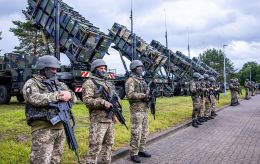
The pontiff also reiterated his opposition to the growth of Europe's military budgets. Last year, they increased the most since the end of the Cold War. Among the reasons, Reuters cites pressure from US President Donald Trump and Russia's aggressive behavior.
"We must also guard against the illusion that rearmament is the answer," the Pope stated.
According to him, Europe must honestly answer the question for itself:
- Whether it is truly making creative efforts for peace in the world;
- Or merely trying to "hold back the wave of war" and preparing for conflicts it considers inevitable.
This speech was the clearest exposition of Leo XIV's political vision for Europe. He called for a return to the EU's core values: the rule of law and the equality of people regardless of race, skin color, class, or profession. These words were spoken against the backdrop of the growing popularity of far-right forces in the region.
Standing alongside French President Emmanuel Macron, the pontiff called on European leaders to integrate migrants and provide them with opportunities for development. He also advocated for legal and safe migration pathways and international cooperation against human trafficking.
"To welcome a person means to integrate them as if they were part of one's own family, offering them the opportunity to develop their gifts, abilities and sensibilities," Leo XIV said.
At the very start of the visit, on September 25, the Pope warned that the UN and other multilateral institutions are experiencing a crisis, and international dialogue risks turning into a farce.
The pontiff's speech came a week after negotiations in New York. On September 22, on the sidelines of the UN General Assembly, Zelenskyy and Trump met for approximately 40 minutes. Following the conversation, the Ukrainian president expressed hope to end the war by winter. He also noted that the most important step from Trump would be the organization of a trilateral meeting with Putin.
According to RBC-Ukraine sources, the central theme of the negotiations in New York was to be energy de-escalation between Ukraine and Russia. However, no breakthrough decisions were expected from the meeting.
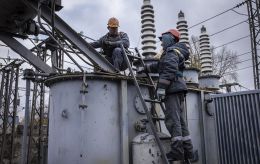
Leo XIV regularly raises the topic of the war in Ukraine. In January, he called on the world to intensify efforts to end the hostilities. Prior to this, the pontiff had addressed Russia with a demand to stop strikes on Ukrainian energy infrastructure due to the severe consequences for civilians.
Shortly after his election in May 2025, the Pope considered the possibility of offering the Vatican as a venue for negotiations between Ukraine and Russia. This was reported at the time by the Secretary of State of the Holy See, Cardinal Pietro Parolin.