Poland removes mandatory visual checks before shooting down air targets

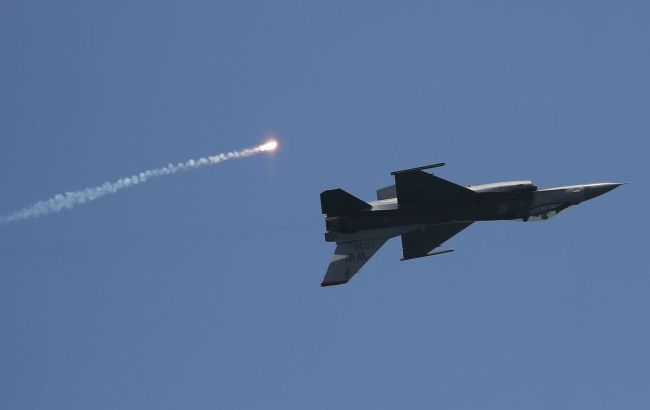 Photo: NATO F-16 fighter jet (Getty Images)
Poland is introducing new procedures for identifying and destroying hostile airborne objects in its airspace starting October 1. They will allow the military to make decisions to shoot down a target without mandatory visual identification, reports Polskie Radio.
As Poland’s Minister of National Defence Władysław Kosiniak-Kamysz said, the new procedures have already been prepared, and the Polish army has begun implementing them.
A report on the readiness of the new rules was submitted to the minister by the operational commander of the Polish Armed Forces, General Ireneusz Nowak.
Kosiniak-Kamysz stressed that changing the procedures does not require amendments to the legislation. The new rules are being introduced at the army level and will determine the procedures for pilots and service members involved in air defense.
How the procedure for shooting down targets will change
The main change concerns the identification of an airborne object. Previously, to confirm a threat, a Polish fighter jet had to approach the target and conduct a visual identification.
Now, instead of mandatory visual contact, so-called positive identification will be used. A decision to destroy an airborne target can be made based on radar data and other systems, as well as information received from the Ukrainian side.
The pilot or operational commander will not necessarily have to approach the object to obtain visual confirmation of its type. The combination of available data may serve as a basis for assessing the threat.
Earlier, Poland’s Deputy Defence Minister Cezary Tomczyk explained that the transition to positive identification would allow the military to use, among other things, radar data, information about an object being in an area closed to flights, and information from the Ukrainian side.
Why Poland changed the rules
Poland’s Ministry of Defence links the changes to the regular threat of drones and other airborne objects entering the country’s territory during Russian attacks on Ukraine.
The previous procedure was designed primarily for peacetime. Mandatory visual identification was intended, among other things, to reduce the risk of mistakenly striking a civilian aircraft or another non-hostile aircraft.
Poland’s Defence Ministry notes that the current situation requires a faster response to airborne threats.
Poland has already stated that the new rules will apply not only to fighter aircraft but also to helicopters. The military will be able to use modern systems to identify targets without the need to approach them at a dangerous distance.
Russia constantly provokes NATO countries with drone flights, especially Poland. However, President Karol Nawrocki’s office has accused some prominent Polish politicians of speculating about the threat of a Russian attack for political gain.