Poland moves to shut EU borders over Russia and Belarus tensions

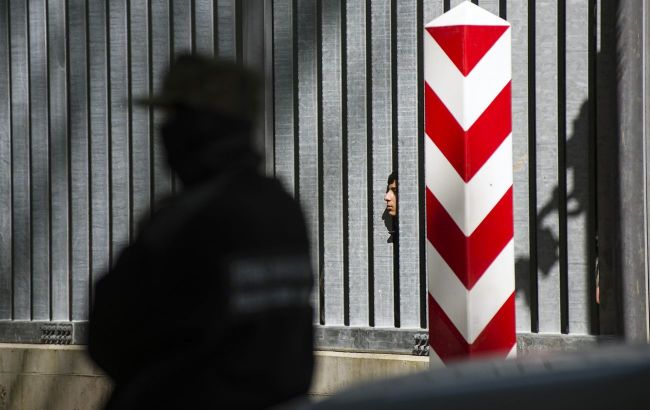 On the border with Poland (Illustrative photo: Getty Images)
Poland has extended temporary border controls on its borders with Germany and Lithuania until October 1, 2026, citing threats of a hybrid migration attack from the regimes of Vladimir Putin and Alexander Lukashenko, according to a report by Polish Radio.
The Ministry of Interior and Administration made the strategic decision to extend temporary border controls on the borders with Germany and Lithuania for another six months, until October 1, 2026.
This step was a direct response to the ongoing hybrid aggression from the regimes of Putin and Lukashenko, who are using illegal migration as a weapon to destabilize the European Union.
Instead of the free movement characteristic of the Schengen Area, travelers will now face strict checks.
Not only are border guards involved in patrols, but so are the police and the Territorial Defense Forces (WOT).
Scope of control: 63 strategic points — Checks will cover 50 locations on the border with Germany and 13 on the border with Lithuania. Muskau Park has once again been included in the list of controlled sites to prevent sabotage groups from infiltrating via pedestrian and bicycle routes.
Why this matters for Europe’s security
Warsaw makes it clear: the migration crisis at the border is not a coincidence, but a meticulously planned operation by the Russian and Belarusian special services. Extending the controls is a necessary measure to cut off the channels of illegal human trafficking through which the Kremlin is trying to probe weak spots in NATO’s and the EU’s defenses.
"We are acting proactively. The threat to public order and internal security posed by artificially created migration flows remains critical," the Polish Interior Ministry stressed.
Legal front and the right to protection
Under the Schengen Border Code, Poland has every right to restrict free movement for up to two years in the event of serious threats. Notification of the enhanced measures has already been sent to the European Commission and the European Parliament. For Ukraine’s allies, this is yet another signal: Poland is taking on the role of the main security hub in Eastern Europe, protecting the rear while Ukraine holds the front line.
What travelers should know?
From April 5, 2026, any vehicle entering or leaving Poland may be stopped for a thorough inspection. Documents: Original passports or ID cards are mandatory. Logistics: Delays at border crossings are possible, especially during the peak summer months.