Poland explains why Zelenskyy lost award while Mussolini still has one

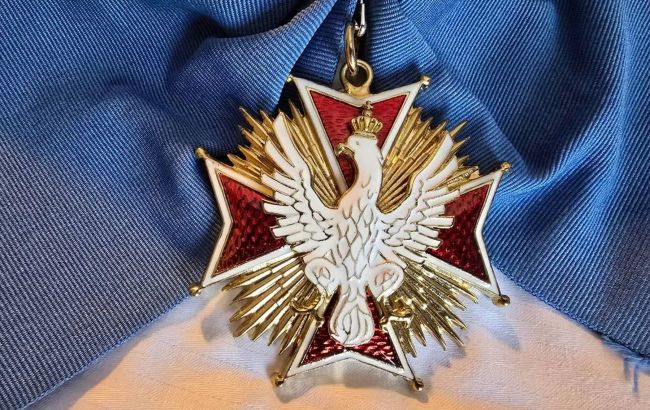 The Order of the White Eagle (photo: t.me)
Warsaw has responded to questions raised after the controversy surrounding the Order of the White Eagle: why some dictators and a Kremlin ally still retain the award, according to a statement by Agnieszka Jędrzak, a minister in the Chancellery of the President of Poland.
Jędrzak explained why the Order of the White Eagle is still held by Italian dictator Benito Mussolini and Russian Empress Catherine II. According to her, the rule is simple: awards are not revoked posthumously.
Jędrzak also commented separately on former German Chancellor Gerhard Schröder, known for his close ties to Russia, retaining the award.
"The former German chancellor, meanwhile, has never insulted the Polish nation as openly as the Ukrainian president has, though his activities in support of Putin's Russia must be condemned as harmful to Poland and Europe," she said.
Jędrzak also noted that nothing similar to what caused the controversy with Ukraine occurred in Germany during Schröder's time in office.
"Under Schröder's government in Germany, no monuments to Hitler or Himmler were erected. No Bundeswehr unit was named after 'SS heroes'," she added.
Why Zelenskyy was stripped of the award
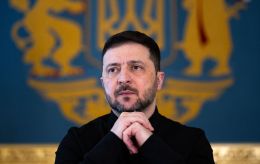
On June 19, Polish President Karol Nawrocki stripped Ukrainian President Volodymyr Zelenskyy of the Order of the White Eagle, the country's highest state award.
The reason was the decision to grant one of the units of the Special Operations Forces of the Armed Forces of Ukraine an honorary title in honor of the Ukrainian Insurgent Army.
After that, former Ukrainian presidents Leonid Kuchma, Viktor Yushchenko, and Petro Poroshenko also renounced the award. Head of the Presidential Office Kyrylo Budanov, Foreign Minister Andrii Sybiha, and former Prime Minister Volodymyr Groysman also gave up their Polish awards.
Meanwhile, Polish business representatives called on both sides to stop. The Polish Entrepreneurship Council appealed to the authorities of both countries to end the public conflict and return to pragmatic dialogue.
Business leaders warned that escalation could cause serious damage to the economies of both countries.
Polish Prime Minister Donald Tusk called the involvement of Polish and Ukrainian politicians in the conflict a strategic mistake that would harm both countries economically, geopolitically, and reputationally.