Tusk sounds alarm over possible Polish exit from EU

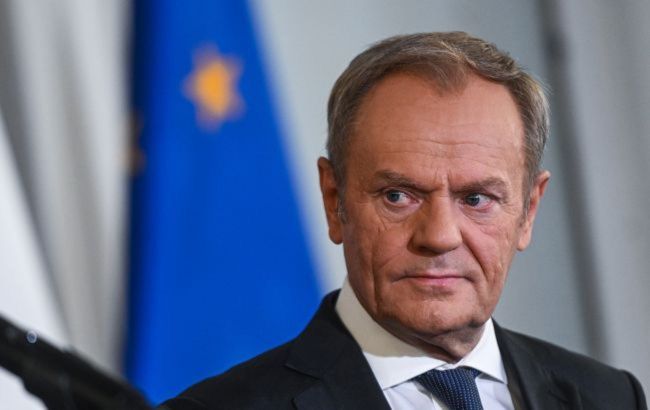 Polish Prime Minister Donald Tusk (photo: Getty Images)
Poland's exit from the European Union has become a tangible risk due to the policies of right-wing forces and the president's veto of key financial initiatives. Such a scenario could seriously undermine the bloc's unity, according to Politico and Poland's premier Donald Tusk.
'Polexit' threat
Polish Prime Minister stressed that the threat of leaving the EU is no longer hypothetical. He claimed that internal Eurosceptic forces are acting in the interest of external players seeking to weaken Europe.
"Russia, American MAGA, and the European right, led by Orbán, want to destroy the EU. This would be a catastrophe for Poland," Tusk said.
He added that factions of the Confederation party and much of the Law and Justice party (PiS) are effectively pushing the country toward a break with Brussels.
Financial blockade, consequences
The situation escalated after President Karol Nawrocki vetoed a law that would have allowed Poland to access €43.7 billion in EU defense loans. This move threatens funding for the military, which is expected to reach 5% of GDP.
The prime minister emphasized the seriousness of the opposition's intentions to leave the bloc.
"Polexit is a real threat today! Both confederations and the majority of the Law and Justice party want it. I will do everything I can to stop them," Tusk said.
Experts note that while general EU support among Poles remains high, one in four is already willing to vote for exit, mirroring the dynamics in the UK before Brexit.
Defense budget struggle
The political clash between the government and the president intensified after Karol Nawrocki vetoed the law that would have granted Poland access to EU-favored defense loans.
Despite this, Donald Tusk assured that Warsaw would secure the resources to strengthen its military, promising not to let the development of its security be stopped.
Earlier, analysts have warned that the president's decision risks Poland's security, as the lack of funds could delay key arms procurement contracts amid a tense geopolitical climate.