Pentagon seeks engineers to build PC without battery or memory

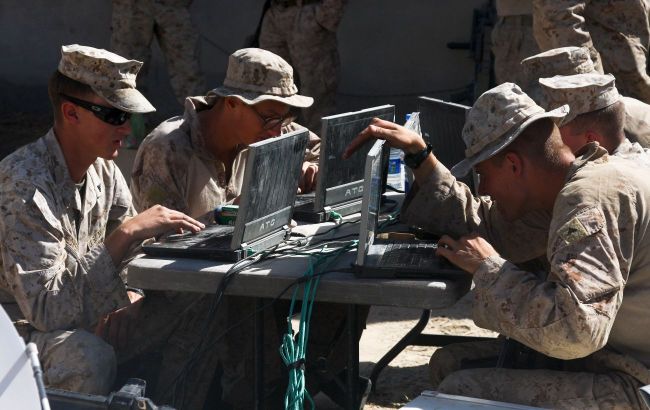 US Army soldiers (Photo: DVIDS)
The Pentagon is looking for developers to create next-generation computers. These machines must operate with minimal power, memory, and under extreme combat conditions, according to The Defence Blog.
The Defense Advanced Research Projects Agency (DARPA) is considering ideas for so-called low-resource computing. This refers to technologies that allow complex software to run on hardware that is too weak or unreliable.
The reason is that modern warfare depends on digitalization. Powerful computers are needed by soldiers, autonomous robots, and missiles, but in the field, access to the electrical grid or stable communication is often lacking.
The civilian market is moving in the opposite direction. Giant AI systems consume as much energy as an entire city. The military needs a different logic.
History lesson: from ENIAC to a greeting card
The DARPA document provides an interesting example: the first computer, ENIAC, weighed nearly 30 tons in 1945 and consumed 150 kilowatts of power. The machine performed only thousands of operations and had less than one kilobyte of memory.
Today, an ordinary musical greeting card surpasses ENIAC in every metric and runs on a small battery. Computing has become almost free. Now the Pentagon wants to understand how far this miniaturization can go.
The military needs a fundamental shift; minor improvements to existing processors do not interest them.
Working on nanowatts
DARPA has divided its requirements into two categories. In the physical domain, experts are looking for systems that operate on nanowatts.
The technology must:
- Passively harvest energy from the environment;
- Operate without external power sources or batteries;
- Function within a few bytes of memory;
- Remain reliable even when components are physically damaged.
The most unexpected proposal is the use of outdated or primitive technologies. DARPA is considering extracting computation even from mechanical CD players or using biological antenna arrays. This would help the US eliminate its dependence on foreign chip manufacturing.
Logic and self-learning in the field
The logical requirements are equally stringent: future systems must function even when data sources cannot be trusted. This is a direct response to the threat of enemy cyberattacks and manipulation.
The Pentagon demands the creation of architectures capable of reprogramming themselves. The system must adapt to new tasks without the help of engineers or a network connection. Operating such equipment must be as simple as possible — even a soldier under extreme stress should be able to understand the interface in seconds.
The project is being managed by the new Multi X Office, led by Dan Ridge. The agency has set a deadline for submitting ideas by July 17, 2026. The most promising proposals will be discussed at a closed seminar in August.
What DARPA has given to humanity
Many technologies once considered purely military are now used by all of us. One of them is GPS, and another is the internet. These technologies, originally developed at the request of the US military, are now accessible to everyone in the world.
What else to know about the weapons of the future
In about 10 years, NATO is expected to deploy a super tank equipped with an autonomous turret and carrying its own drones. The new vehicle will be capable of functioning as a command center for robotic systems directly on the battlefield.
In the next three to five years, the war in Ukraine will shift to a battle of operating systems. The Ukrainian Ministry of Defense plans to integrate all drones, robots, and reconnaissance data into a single digital network.