OpenAI launches ChatGPT Translate: Will it replace Google Translate?

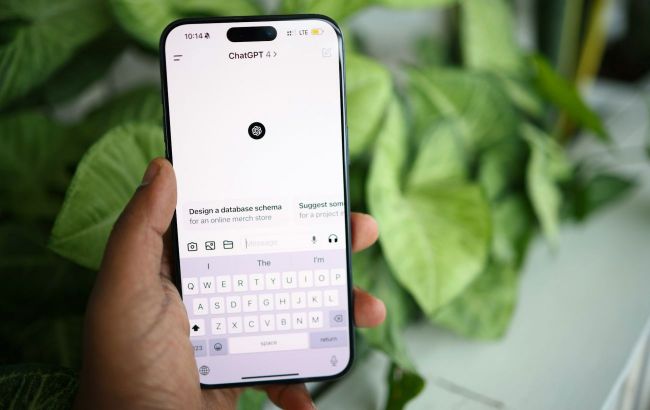 ChatGPT to get a standalone translator (photo: Unsplash)
OpenAI unveils ChatGPT Translate new web service for context- and tone-aware text translation, not just literal word meaning, according to Neowin.
How ChatGPT translate works
Unlike the standard ChatGPT interface, the Translate version uses a two-panel layout, similar to classic translators like Google Translate. The left panel automatically detects the source language, while the right panel allows you to select the target language.
Below the input fields are buttons for quick translation edits. With a single click, you can change the text style. Choosing this option opens the full ChatGPT interface and automatically inserts the appropriate prompt.
Available style options include: “Make text smoother,” “Business style,” “Explain like I’m five,” and “Academic style.” This allows users to adjust phrasing, increase formality, simplify terminology, or adapt text for research or educational purposes.
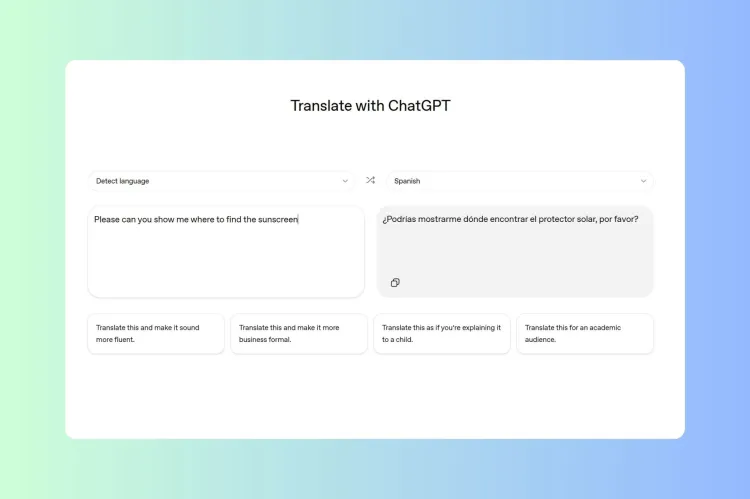
ChatGPT Translate interface (photo: The Verge)
Advanced Features in the Full ChatGPT Interface
When using the full version of ChatGPT, you can speak to the service in one language and receive a response in another. Voice capabilities are integrated directly into the chat, so both the text and audio versions of the translation appear simultaneously.
You can also upload images, menus, road signs, or documents. ChatGPT recognizes the text, translates it, and allows you to ask follow-up questions, for example: “Which of these dishes are vegetarian?” or “What does this legal clause mean for me?”
Advantages and Limitations
Google Translate supports over 240 languages, whereas ChatGPT works with roughly 50. However, the chatbot has an edge when tone, style, brand voice, or cultural adaptation are important elements that traditional translators handle far less flexibly.