Oil profits may help Russia fund war, but there's a catch – ISW

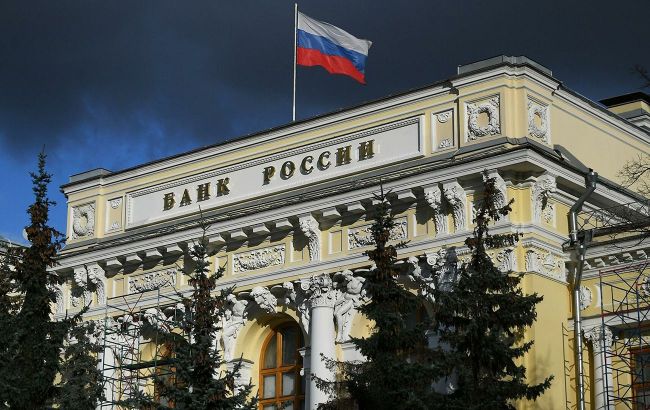 Photo: building of the Central Bank of Russia (cbr.ru)
Russia's economy continues to suffer under the burden of massive military spending, despite a temporary increase in oil revenues due to the war in the Middle East, according to the Institute for the Study of War (ISW).
Deficit hits record levels
According to Ukraine's Foreign Intelligence Service, Russia’s federal deficit reached 4.6 trillion rubles (approximately $61 billion) in the first quarter of 2026 — significantly exceeding the planned deficit for the entire year of 3.8 trillion rubles (about $50 billion).
Russia has gradually depleted the liquid reserves of its National Wealth Fund to finance the war and, in November 2025, was forced to resort to selling gold reserves due to unsustainable spending.
Inflation and falling real incomes
The real inflation rate in Russia is likely much higher than what the Central Bank claims. In the first months of 2026, food prices have been rising sharply.
An extremely low unemployment rate does not indicate a strong labor market but rather a severe labor shortage, which is driving wage growth (wage inflation) in both civilian and defense sectors, in turn fueling overall inflation.
Job cuts
Russia's business newspaper Vedomosti reported on April 23 that the number of planned layoffs in Russia has increased by 43% since June 2025, reaching 105,147 as of April 1.
Oleg Sokolov, a representative of the Federation of Independent Trade Unions of Russia, told the publication that the layoffs may be caused by a lack of funds due to deficits in federal and regional budgets.
ISW's "caveat"
According to ISW, rising oil revenues allow the Kremlin to temporarily cover budget gaps, but they do not resolve deep structural problems. Analysts note that these funds are primarily directed toward military spending, exacerbating the imbalance between defense and civilian sectors.
Spending additional funds beyond the plan only accelerates inflation and keeps interest rates high, which stifles businesses.
Several sectors in Russia are under pressure due to high key interest rates and declining demand, including steel, coal, and retail.
At the same time, some export-oriented sectors remain resilient due to favorable external market conditions.
An additional blow to the Russian economy comes from the fact that even a significant rise in oil prices amid the US-Iran conflict cannot prevent a recession.
Its structural problems remain too deep, and temporary price increases do not eliminate systemic imbalances.