Oil prices climb again as Middle East tensions escalate

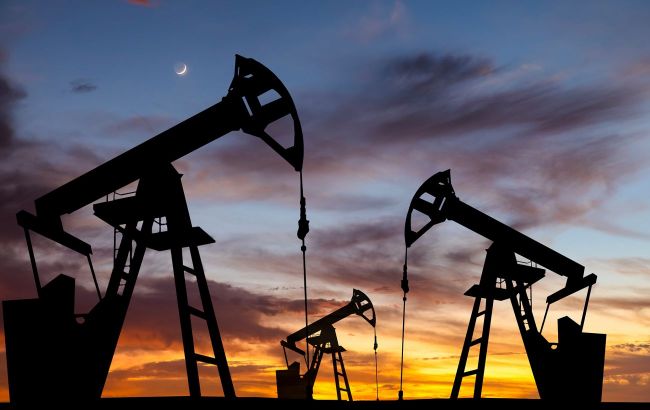 Photo: Oil prices continue to rise amid escalating tensions in the Middle East (Getty Images)
On Wednesday, July 15, oil prices rose again after US President Donald Trump reimposed a naval blockade on all Iranian ports, and Tehran launched strikes against US infrastructure in the region, according to Reuters.
Brent crude oil futures rose 99 cents, or 1.2%, to $85.72 per barrel.
West Texas Intermediate crude oil futures rose 64 cents, or 0.8%, to $79.98 per barrel.
The previous day, July 14, oil prices closed up 2%, reaching their highest level in a month.
This was due to attacks that exacerbated supply disruptions through the Strait of Hormuz, through which approximately one-fifth of global oil and liquefied natural gas supplies were transported before the start of the US-Israeli war against Iran.
"While the physical oil market remains adequately supplied, any further escalation involving the Strait of Hormuz or additional sanctions on Iranian exports could quickly tighten market sentiment and add further risk premiums," says Priyanka Sachdeva, senior market analyst at Phillip Nova.
Analysts suggest that the likelihood of oil prices reaching $100 per barrel again in the near future remains high if hostilities in the Middle East intensify and damage the energy infrastructure of the Persian Gulf region.
At the same time, if diplomatic efforts succeed and shipping through the Strait of Hormuz resumes, the price of Brent crude could return to the $75–80 per barrel range.
Middle East escalation
On July 15, US Central Command launched a new wave of strikes against Iran and, at the same time, reinstated the naval blockade of Iranian ports and coastal areas.
Before that, on the night of July 12, Iran announced the complete closure of the Strait of Hormuz, accusing several vessels of attempting to pass through via an unauthorized route. During the incident, Iranian forces attacked a container ship, after which the US launched a series of strikes against Iranian targets.
In response, US Central Command (CENTCOM) stated that the Strait of Hormuz remains open to international shipping.
Following this, US President Donald Trump stated that Washington should receive compensation for ensuring the safety of shipping in the Strait of Hormuz.
However, later, after talks with leaders of Middle Eastern countries, he abandoned the idea of imposing a 20 percent fee for ships passing through the strait. Instead, the US decided to focus on new trade and investment agreements with the Gulf states.
Iran also launched missile attacks on two UAE tankers in the Strait of Hormuz—one crew member was killed, and two Ukrainian citizens were among the wounded.