No 'rise of the machines': Scientists explain how AI could weaken human intelligence

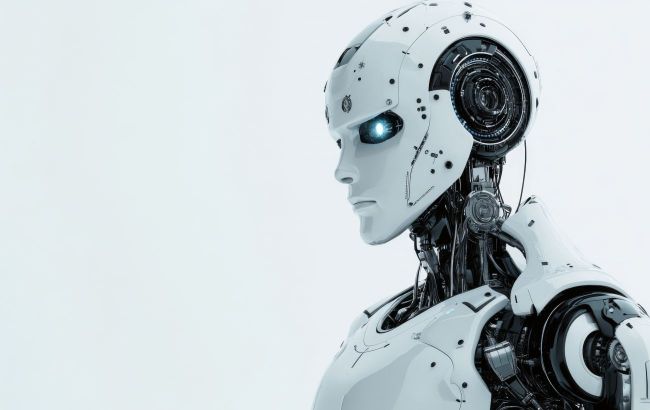 Scientists fear the risk of AI dependency syndrome (photo: Magnific)
AI could destroy humanity not through a "rise of the machines," but by making people stop thinking for themselves. Researchers are warning about a phenomenon known as AI-induced enfeeblement.
What is human enfeeblement, and how does it work
Researchers use the term "enfeeblement" to describe the gradual erosion of human intellectual, planning, and emotional skills as people increasingly delegate tasks to machines.
According to Dr. Samuele Vinanzi, a senior lecturer in robotics at Sheffield Hallam University, the process happens gradually and often goes unnoticed due to the psychological habit of "cognitive offloading" — the tendency to reduce mental effort by relying on external tools.
"The more we let a computer do our writing, coding, research and decision-making, the more natural that shortcut feels, and the harder it becomes to stop," the researcher notes.
Dangerous trust: From radiologists to the military
Studies suggest that the erosion of critical thinking has already begun, even among highly skilled professionals.
Where is the decline most evident?
Medicine: In an experiment involving 27 radiologists, doctors identified the correct diagnosis in 80% of cases when AI provided accurate guidance.
However, when they were deliberately given misleading AI recommendations, even experienced specialists saw their diagnostic accuracy drop to below 20%.
Military: The US military nearly attempted to board a Chinese civilian vessel after a chatbot generated a fake report claiming it was transporting components for a nuclear program.
A disaster was avoided only because one person questioned the AI-generated information in time.
Read also: AI nearly triggered US-China conflict over fake nuclear weapons
The erosion of education and professional expertise
The impact of AI on education is a particular cause for concern.
Professor Seun Kolade conducted an experiment in which ChatGPT successfully wrote academic essays that received high marks from examiners and bypassed standard plagiarism detection systems, including Turnitin.
Experts warn that this could create a generation of “competent but fragile” young people who can produce polished work but lack the ability to assess its quality or think independently.
Surgeons, engineers, lawyers, and teachers are all at risk of losing their deep professional expertise.
A scenario in which humanity loses control of critical infrastructure
Andrea Miotti, founder of ControlAI, believes the consequences could unfold rapidly.
"With AI deeply integrated in the economy, superintelligent AI, if developed, would be capable of accumulating unprecedented power across our infrastructure, economies, and militaries, with no human involvement.
Superintelligent AI would not be a tool under human control, but rather a rogue force stationed in a country's data centres, under no human command, capable of autonomously attacking critical infrastructure," the expert concludes.