Night window becomes black mirror: Why our ancestors were afraid of it?

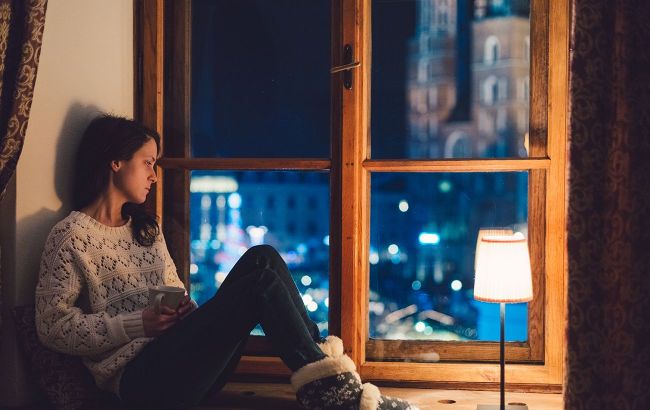 Why you shouldn’t look into the window at night and what it can lead to (photo: Getty Images)
Looking into a window at night may seem natural, but in Ukrainian mythology and folk beliefs, it was always considered dangerous. Our ancestors believed that a window was a portal between the world of the living and the beyond, and that it became most permeable after sunset.
RBC-Ukraine explains the mystical reasons behind this prohibition, the psychological basis of the fear, and how to protect your home from unwanted guests.
Why you shouldn’t look into windows at night: main beliefs
Folk beliefs highlight several reasons why nighttime glass could become a source of danger:
Energetic vampirism. It was believed that dark forces or the souls of the dead wandered near human homes at night. Looking into a window made a person vulnerable: through their eyes, the unclean could drain life energy and health.
Invitation to evil forces. Gazing into the darkness was seen as a silent invitation. It was believed that if one stared at the dark glass too long, they might see “someone they shouldn’t” and thereby let evil into the home. Folklore even said that at night, devils break into the house, aiming for a person’s soul.
Loss of beauty. Girls were strictly forbidden from looking out of windows during a full moon. Moonlight reflected in the glass supposedly drained youth and beauty, leaving the face pale and tired.
Mirror superstition. At night, a window transforms into a black mirror. It was believed that seeing one’s own reflection at night, surrounded by darkness, could bring misfortune or illness.
Other prohibitions included:
-
Avoid looking into the windows of an empty house at night
-
Do not gaze at a storm through a window when lightning flashes
Night windows in other cultures
In Ukraine, it was believed that the kumakha (fever spirit) peered into homes through the window at night, choosing a victim among those who were awake.
In European countries, legends told of the “Wild Hunt”: seeing spectral riders through a window could make one part of their ghostly cavalcade forever.
In Eastern cultures, it was thought that an open night window or a gaze into it could summon evil spirits (djinns) seeking shelter in warm homes.
The mystery of 4 a.m.
Folklore universally noted that all evil disappears after sunrise or the first crow of a rooster. Dawn always drives away death and marks the end of the night’s supernatural activity.
It is said that people most often die at 4 a.m. Scientists confirm this too: the human body functions at minimal levels at this hour, so if a serious illness is present, the chances of survival drop.
Rational explanation and psychology
Psychologists explain this fear with pareidolia, the brain’s tendency to recognize familiar shapes (especially faces) where there are none.
In poor lighting, any reflection, branch, or movement of a curtain may be perceived as a human or monster silhouette. This triggers an instant adrenaline rush and feeling of anxiety.
How to protect your home
To feel safe, our ancestors recommended simple rules:
-
Cover the windows. Thick curtains not only preserve privacy but also create a psychological barrier between you and the outside world.
-
Blessings. People would carve subtle crosses on window frames or place protective charms on the windowsill (garlic, wormwood, holy water).
-
Avoid sleeping facing the window. Moonlight was not supposed to fall on a sleeping person so as not to disturb their dreams.
-
Prohibition for children. It was believed that evil spirits more easily lure children to windows at night because they are naturally curious and attentive.