Next target identified: media reveal who could be in Trump's sights after Venezuela

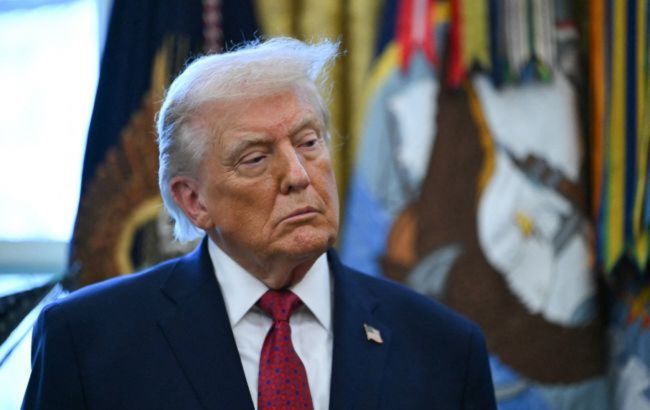 Photo: Donald Trump, President of the United States (Getty Images)
Against the backdrop of recent US actions in Venezuela and threats concerning Greenland, Canada is closely monitoring potential risks to its security and economy, assessing the prospect of pressure from Washington, according to a Bloomberg publication.
Potential threats
Some experts do not rule out a scenario of "military coercion" by the United States. According to Thomas Homer-Dixon, any attempt by Washington to apply such pressure could prove "extraordinarily costly."
Former Canadian government adviser on security and border issues Wesley Wark said US actions in Venezuela and threats related to Greenland are "alarm signals for Canada," showing that the United States has changed.
Economic and military risks
Analysts view a military invasion of Canada as unlikely but warn of economic pressure, including the possible suspension of USMCA trade preferences or the introduction of new tariffs. Such steps could deal a serious blow to Canada, given that around 70% of Canadian exports go to the US.
Canada’s armed forces, numbering fewer than 100,000 personnel, are not yet prepared for a more hostile environment, although the government plans to expand the military and increase investment in weapons and equipment.
Sovereignty and trade dependence
Efforts to diversify trade, particularly toward Asian markets, partially reduce dependence on the US. However, Carleton University associate professor Philippe Lagassé warns that the more concessions Canada makes to preserve access to the American market, the higher the risk of a gradual loss of real sovereignty, even if formal independence remains intact.
Territorial rhetoric
The US president has repeatedly referred to Canada as the “51st state,” pushing the idea of annexation. He has also previously imposed steep tariffs on Canadian exports, triggering trade disputes between the neighboring countries.
Earlier, Colombia’s president said that Donald Trump’s interest in foreign territories is driven by the US economy’s dependence on coal and oil, which account for about 70% of the country’s energy mix, prompting Washington to seek these resources abroad.
Trump has also stated that the US intends to take steps regarding Greenland to prevent potential influence from Russia or China, saying Washington does not want those countries as neighbors.