New World Bank tranche to be directed to Ukrainians’ basic needs

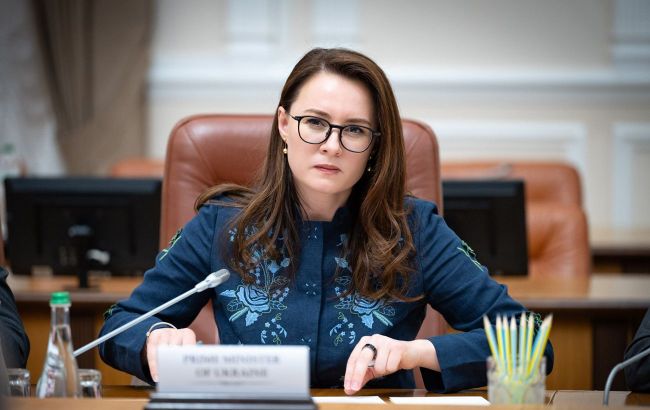 Photo: Prime Minister of Ukraine Yulia Svyrydenko (facebook.com/KabminUA)
Ukraine has received an additional €236 million in funding through the World Bank’s PEACE in Ukraine project. The funds will be directed toward covering essential social expenditures and pension payments, according to Ukraine’s Prime Minister Yulia Svyrydenko.
Where the funds will go and who provided the guarantees
According to her, the new financing tranche was transferred to Ukraine’s State Budget from the International Bank for Reconstruction and Development under a guarantee from the Government of the Kingdom of Sweden.
The raised funds will help the state maintain stability in the social sector amid the ongoing war.
"We value the significant and timely support of our friends and partners, which strengthens Ukraine in the conditions of Russia’s full-scale invasion," Svyrydenko emphasized.
What is known about the PEACE in Ukraine project
The PEACE (Public Expenditures for Administrative Capacity Endurance) in Ukraine project was launched to provide budget support to the Ukrainian state.
Thanks to the new tranche from Sweden, the total amount of funds raised under this World Bank program has already reached $53.5 billion.
Ukraine–World Bank cooperation
The World Bank is one of Ukraine’s key financial partners, covering not only current social expenditures but also financing long-term recovery programs.
In particular, in May 2025, the bank approved additional financing of $84 million under the HOPE project. These funds were allocated to the restoration of war-damaged homes under the state eVidnovlennia program, which will allow more than 25,000 Ukrainian families to return to housing.
At the same time, financial institution experts note that due to Russia’s ongoing aggression, Ukraine’s economy faces serious challenges.
According to the World Bank’s April forecast, the main factors slowing Ukraine’s economic growth in 2024–2025 include reduced external demand, labor shortages, and power supply disruptions. Economic acceleration to 5.2% is expected only in 2026, provided that active hostilities end and large-scale reconstruction begins.