New Mars record: Perseverance rover drives further than Opportunity

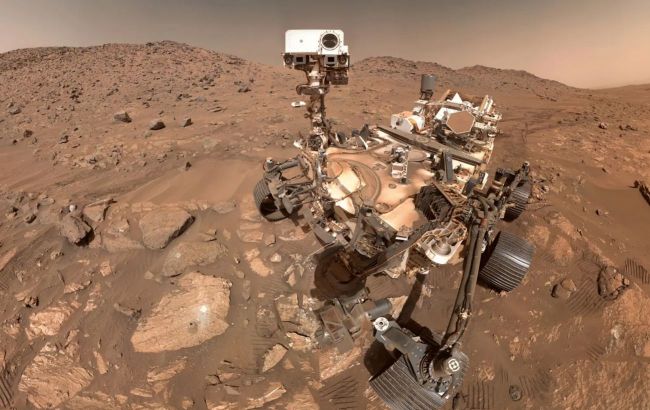 Perseverance breaks Opportunity’s legendary record (photo: NASA)
NASA’s Perseverance has become the most productive rover in the history of planetary exploration, having traveled 45.22 km on Mars. On the 2,006th Martian day (sol) of its mission, the rover surpassed the previous record held by Opportunity, which had remained the distance leader for years, according to Interesting Engineering.
How the robot learned to "think while moving"?
According to scientists, the main factor behind this rapid progress was a colossal difference in speed. While it took Opportunity nearly 15 years to travel its 45.16 kilometers, Perseverance covered the same distance in approximately 5.5 years.
The secret lies in the fundamentally new AutoNav autonomous navigation system:
- Dependence on autopilot: AutoNav controls over 90 percent of Perseverance’s total mileage, whereas for the earlier Opportunity, this figure barely reached 5 percent.
- Data processing power: During each terrain survey, the onboard software analyzes about 600,000 measurement points to build a 3D map of hazards. For comparison, NASA’s first Mars rover, Sojourner, operated with only 20 points.
- Autonomy: Using onboard cameras, the rover images the surrounding relief, identifies dangerous obstacles, and selects the optimal route between points set by engineers on Earth, without wasting time waiting for instructions from NASA’s control center.
Thanks to this, the apparatus is capable of moving at record rates, covering up to 412 meters per Martian day (sol).
The record-breaking drive that allowed it to overtake Opportunity covered 91.31 meters.
Exceeding NASA’s plans and conquering old records
According to Steven Lee, project manager for Curiosity and Perseverance at NASA’s Jet Propulsion Laboratory (JPL), the initial program envisaged a mileage of no more than 20 kilometers.
The indicator has been exceeded by more than twice, and thanks to the excellent condition of all chassis systems and successful resource testing of the apparatus, the rover will continue to increase this record for years to come.
Perseverance’s achievements have placed it in first place in the general list of extraterrestrial travelers:
- Sojourner (first rover) – about 100 meters;
- Spirit – 7.7 kilometers;
- Curiosity (currently operating nearby – ed.) – over 38.07 kilometers;
- The Apollo 17 Lunar Roving Vehicle also remains behind.
NASA has already approved the first official extension of the Perseverance mission, which will last until at least the end of 2028.
Search for signs of life
During its work in Jezero Crater, the rover has collected 29 valuable samples of rock and soil from the bottom of a former lake, an ancient river delta, and the crater rim.
The age of some of the studied stones reaches 4 billion years - they have preserved geological traces that were long ago destroyed on Earth by erosion and plate tectonics.
Among the most important findings is the Cheyava Falls rock, in which a potential biosignature was detected, which may indicate the existence of microorganisms in the past.
Currently, the Mars rover is moving through the Lac de Charmes area toward the Idubi region. There, scientists hope to find traces of ancient hydrothermal systems - underground hot springs where heated water interacted with rocks, creating favorable conditions for life.
After this, Perseverance will head south to the Rainbow Falls object - a 100-meter fragment of ancient crust exposed by a meteorite impact.
In parallel, NASA specialists are preparing updates to the navigation software, which will allow the rover to orient itself using orbital maps directly while moving and work even longer each day.
More interesting: