Neuralink breakthrough: Brain signals converted into voice for first time

 Neuralink prepares for mass rollout of chips to restore speech (screenshot: Neuralink)
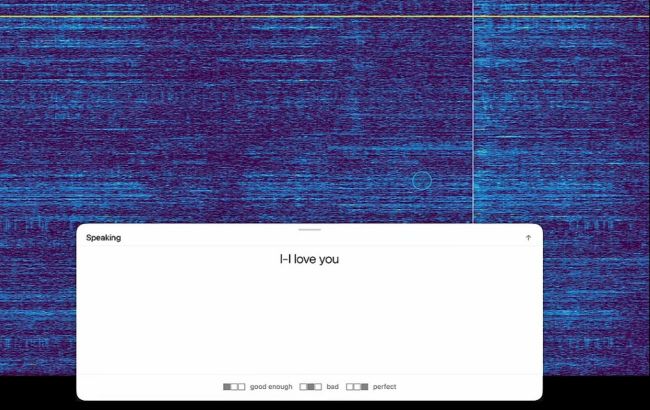
Neuralink has converted brain signals into voice - a patient with amyotrophic lateral sclerosis (ALS) was able to speak again thanks to AI. During the VOICE trial, he said "I love you" in a voice reconstructed from old recordings, according to Neuralink.
Instead of a virtual keyboard - fast direct speech
The main difference between the new VOICE program and the previous PRIME study lies in where exactly Neuralink reads brain signals and how it uses them to restore speech.
Key features
- Direct decoding: The implant is placed directly in the speech motor cortex, bypassing the stage of typing text on a virtual keyboard.
Native voice synthesis: Artificial intelligence recognizes neural waves formed by thoughts and reproduces them as sound, restoring the patient's original timbre based on their archival recordings.
Ambitious goals: If academic systems (such as the UCSF development led by Edward Chang) achieve speeds of up to 18 words per minute, Neuralink is targeting 140 words per minute. This is as close as possible to a natural speaking pace.
Through the VOICE trial, Terry is using his Neuralink implant to help fine-tune a brain-to-voice interface for himself and others who can’t speak. He trained the algorithm first by miming speech as best he could, then by simply thinking the words and hearing them come out in his… pic.twitter.com/IBmgDgNz1c
— Neuralink (@neuralink) September 18, 2026
Special FDA status and first reviews
The VOICE program has already received "Breakthrough Device Designation" status from the FDA—this accelerates regulatory review, although it is not yet full approval for the mass market.
Current project status
- Participants: Over 20 Neuralink implants have been installed worldwide, two of which are directly within the VOICE study.
- Target audience: Patients with ALS, primary lateral sclerosis, stroke consequences, and spinal cord injuries are being recruited for the trials.
- Patient feedback: Kenneth Shockley, a former medic living with ALS who became one of the first trial participants, publicly noted that thanks to the chip, he finally gained the opportunity to "resist the disease and regain control over his own life."
Neurotechnology race: invasive chips vs. vascular stents
Neuralink is not the only player in the field of brain-computer interface (BCI) development. Elon Musk's startup stands out because the company chooses a more invasive yet productive approach.
Comparison with other developments
Synchron uses the Stentrode device, which is implanted through blood vessels without opening the skull. This is safer but limits functionality mainly to simple selections and commands (clicks).
Precision Neuroscience uses a thin film with electrodes that is placed on the surface of the cerebral cortex.
Neuralink's approach: Direct implantation of microelectrodes into brain tissue, which ensures the highest accuracy in recognizing complex signals necessary for full speech.