NATO's Cold War model remains unchanged: Ukrainian official warns of risks to Western unity


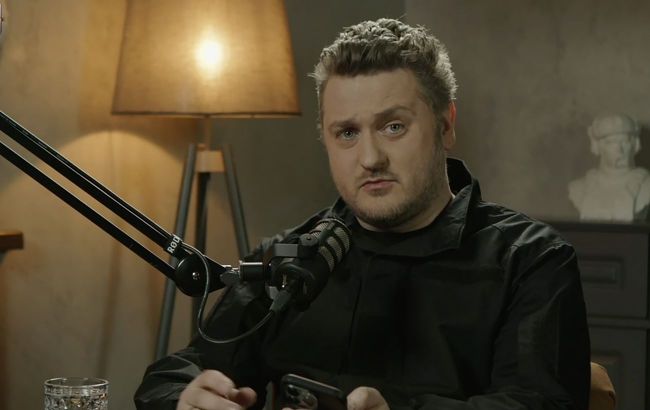 Photo: Andriy Kovalenko (video screenshot)
The Western world order and NATO's structure are still built on Cold War-era principles, where a strong US helps a weaker Europe maintain the balance of power, Andriy Kovalenko, former head of Ukraine's Center for Countering Disinformation and a lieutenant in the Ukrainian Defense Forces, said.
According to Kovalenko, the global security architecture encompasses the European continent, Japan, South Korea, and the entire Indo-Pacific region. In Europe, Germany and France are now economically strong, but the Nordic countries could become the main pillars of stability.
The role of the UK and Russian propaganda
Kovalenko noted that British intelligence outpaces US intelligence in many areas, while Russia is a strategic enemy of the UK. As a result, Russian propaganda is actively trying to undermine Western unity through manipulation.
"Russian propaganda benefits from portraying Britain as if it controls Ukraine, using this narrative to explain and justify its actions against Ukraine. It also seeks to push the idea into the US information space that Britain is acting against US interests and that Europe should not be helped because Britain is pulling the strings there," he explained.
Risks to Europe's security
In Kovalenko's view, a weakened United States is critically disadvantageous to both Ukraine and Europe, as it would lead to serious security crises. This concern is particularly pressing amid possible political shifts in key EU countries.
"A weak US is not in our or Europe's interests. Because then we will see a difficult situation in Europe, including in terms of security, especially if Alternative for Germany wins the election in Germany and Marine Le Pen wins in France. The Nordic countries will remain the alliance's stronghold in Europe," Kovalenko concluded.
Read also: Marine Le Pen vows to end French aid to Ukraine if elected president