Lithuanian President urges EU to hit Russia's energy giants with tougher sanctions

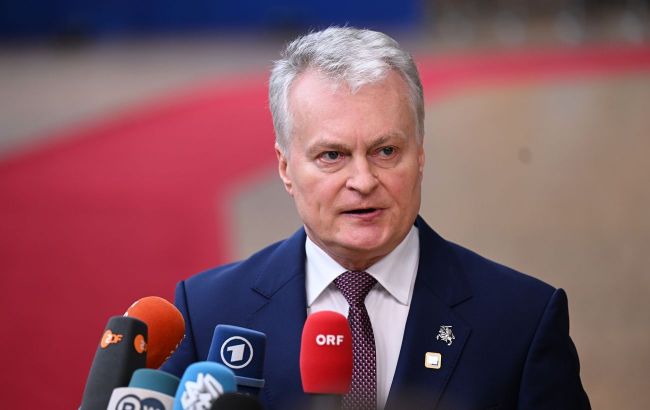 Photo: Lithuanian President Gitanas Nausėda (Getty Images)
Lithuanian President Gitanas Nausėda has called on the European Union to act decisively on additional sanctions against Russia and Belarus. He urged the bloc to target the key companies of the countries, Delfi reports.
"We must be firm. Sanctions should be aimed at the most sensitive points - Gazprom, Novatek, and Lukoil. Only such bold decisions can cause real damage to the regime and affect Russia's economy, which is already in a difficult state," Nausėda said, stressing that "now is not the time for doubt."
The President emphasized that Europe must increase pressure on Moscow to make it pay for its aggression against Ukraine. He also noted that Russia's economy is already showing serious problems and that tougher sanctions are needed to have a real impact.
At the EU summit in Brussels, leaders are discussing not only sanctions but also financial assistance for Ukraine.
The European Commission has proposed providing €90 billion in tranches in 2026–2027 to cover military and financial needs, as well as an additional €45 billion to repay previous loans.
However, some countries, including Belgium, oppose using frozen Russian assets as loans, citing legal and financial risks.
Approval of the loan requires a "qualified majority" - 15 out of 27 EU member states, which could complicate the process.
Beyond Ukraine-related issues, the EU summit will also address the bloc's long-term budget for 2028–2034, the progress of candidate countries, the EU's economic challenges, and a possible free trade agreement with Mercosur countries (Brazil, Argentina, Uruguay, and Paraguay).
Lithuania has repeatedly called for tougher sanctions against Russia and Belarus, highlighting their role in financing the war against Ukraine.
This year, Russia's economic situation has worsened due to existing sanctions and declining energy revenues, making stronger EU pressure particularly relevant.
Talks in Brussels are expected to be lengthy and difficult as member states seek to balance legal safeguards with continued support for Ukraine.
Sanctions against Russia
On December 15, the European Council decided to expand sanctions, imposing restrictions on nine individuals and companies involved in the operation of Russia's shadow fleet.
Those added to the sanctions list include businessmen linked to Russia’s state oil giants Rosneft and Lukoil, who control vessels used to transport Russian crude oil and petroleum products. EU officials say these entities concealed the true origin of cargoes and relied on illegal and dangerous shipping schemes.
Earlier, in October 2025, the European Union formally approved its 19th package of sanctions against Russia. Its key objectives are to reduce Kremlin revenues, shut down sanctions-evasion channels through third countries, and increase pressure specifically on the shadow fleet.
According to Ukrainian intelligence, roughly one in six oil tankers worldwide currently belongs to Russia’s shadow fleet - about 17% of all active vessels of this type.