Kremlin signals 'fatal consequences' for EU as naval blockade fears grow

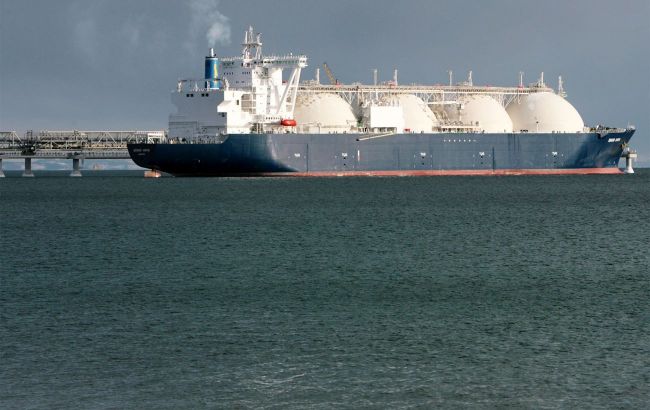 Russian tanker (Illustrative photo: Getty Images)
The Russian Foreign Ministry has hinted at potentially “fatal consequences” for the European Union over plans to restrict the movement of Russian ships, states Russian Deputy Foreign Minister Sergei Ryabkov.
Speaking to state media, Ryabkov claimed that the number of countries in the EU does not constitute an advantage in what he called a dangerous game allegedly initiated by the West. He confidently reminded listeners of the Russian Navy’s considerable experience in protecting freedom of navigation.
In this way, Moscow signaled that any attempts to limit the movement of Russian military and commercial vessels would cross a red line, potentially triggering an uncontrolled conflict.
According to Ryabkov, experiments with Russia’s presence on the world’s oceans could end badly for the experimenters themselves.
The statement was made during the presentation of a special issue of the journal Russkaya Mysl, dedicated to Russian-American relations.
Many factors suggest the Kremlin is seriously concerned that international sanctions and environmental regulations could provide a legal pretext for blocking key maritime routes to its shadow fleet.
Moscow clearly understands that it has already lost control over the Baltic. After NATO’s expansion, the Baltic Sea has effectively become an internal sea of the Alliance, where every movement of a Russian vessel is fully visible.
“Experience” best left unmentioned
Ryabkov’s comments about Russia’s experience in implementing measures at sea sound particularly ironic in light of the losses suffered by the Russian Black Sea Fleet. Over two years of full-scale invasion, Russian sailors have demonstrated a rather unique skill set:
- Flagship at the bottom: The sinking of the cruiser Moskva became a symbol of the collapse of Russia’s naval ambitions.
- Logistics paralyzed: Large Russian landing ships are being targeted one by one by Ukrainian naval drones and missiles.
- Flight from Crimea: Russia was forced to withdraw its most combat-ready vessels from Sevastopol, acknowledging its inability to defend its main base.
Ryabkov’s statement is a typical Kremlin attempt to pass wishful thinking as reality. By calling Europeans experimenters, Moscow tries to mask its own strategic helplessness.
Strikes on Russian submarines
On February 16, in Vyborg, where one of the Baltic Fleet’s infrastructure points is located, sirens sounded, and a blackout occurred.
In December last year, Ukrainian Security Service drones attacked a Russian submarine in the port of Novorossiysk, marking the first recorded instance in history of a drone strike on a submarine.
Additionally, reports indicate that the port of Novorossiysk remains a dangerous location for Russian ships, as Ukrainian forces can target them there.