Pediatrician warns about Kinder Surprise and its impact on children

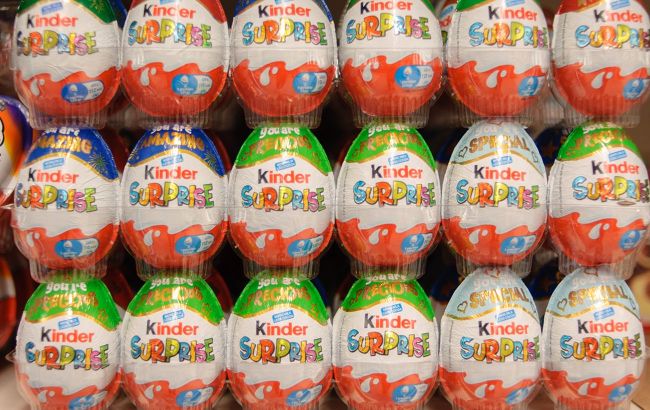 Pediatrician explains the risks of Kinder Surprise (photo: Getty Images)
Popular chocolate eggs, Kinder Surprise, with hidden toys, may influence the formation of a habit in children of seeking random rewards. This may share similarities with gambling mechanics, according to the Instagram page of pediatrician Dariia Vlasenko.
Gaming addiction
According to the doctor, gaming addiction is when gambling stops being entertainment and starts controlling a person. There is a loss of control, a person cannot stop, and gaming becomes more important than everything else.
It is an addiction where playing turns into a need that is difficult to control, even when it causes harm.
“According to WHO, gambling disorder belongs to ‘disorders due to addictive behavior’ and is characterized by impaired control, increasing priority of gambling over other areas of life, and continuation or escalation despite negative consequences,” the statement says.
Not all “surprises” affect a child in the same way
A surprise itself is not a problem. The risk increases when the following factors are added:
- Frequent purchases
- Random outcomes (you never know what you will get)
- Chasing rare items
- Limited editions (“get it now”)
- Fear of missing out
- Good effects that intensify emotions
- The possibility of selling or winning something valuable
- Individual vulnerability of the child
Randomness on its own does not equal gambling. A simple Kinder Surprise does not equal gambling addiction.
Classic surprise toys are usually safe, as there is no monetary reward or feeling that something can be earned.
An important difference is frequency. A one-time surprise and repeated purchases are two very different things.
“Once is an experience. Many times in a row is already a behavior. The key is not the spending itself, but the fact that the child pays for an unknown outcome. Studies show that random purchases are more closely linked to gambling behavior than regular purchases,” the doctor added.
When the outcome is unpredictable, the brain wants to repeat it. Not only the win, but also the anticipation and suspense create a feeling of satisfaction. That is why such formats can become addictive.
“The brain seems to say: what if next time I get lucky? The ‘near miss’ effect increases the desire to continue,” Vlasenko explained.
Effect of Kinder Surprise
A regular Kinder Surprise is not the most risky format. If it is a simple toy without constant repetition, the impact is much weaker.
What it does not contain:
- Fast one more time cycles
- Almost won animations
- Bulk purchase sets (buy many at once)
- Resale or earning potential
- Pressure like only today
That is why it is not the same as blind boxes or loot boxes. Those are much more addictive due to repetition systems and behavioral triggers.
What parents should pay attention to after buying a Kinder Surprise:
- The child wants to buy more and more
- “I need that rare toy” appears
- Belief that “next time I’ll definitely get it”
- Strong disappointment when the desired toy is not received
- Constantly watching unboxing videos and then wanting to buy again
This material is for informational purposes only and should not be used for medical diagnosis or self-treatment. Our goal is to provide readers with accurate information about symptoms, causes, and methods of detecting diseases. RBС-Ukraine is not responsible for any diagnoses that readers may make based on materials from the resource. We do not recommend self-treatment and advise consulting a doctor in case of any health concerns.