Kim Jong Un opens museum showcasing captured Ukrainian military gear

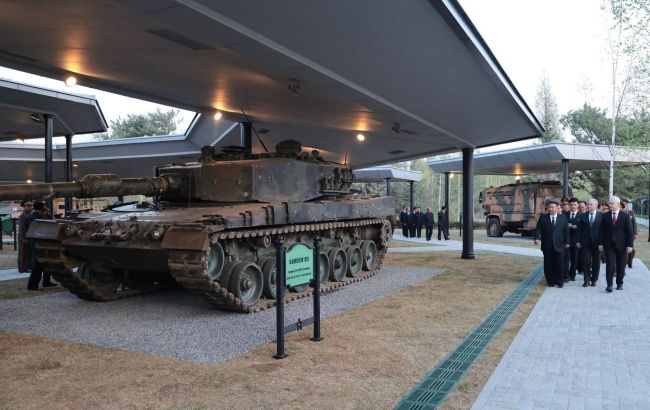 Photo: North Korea opens museum displaying weapons seized from Ukraine (Russian media)
On April 26, North Korea opened a museum featuring captured Ukrainian military equipment, Leopard and Abrams tanks, Marder armored vehicles, and other weapons, according to the Korean Central News Agency (KCNA).
What museum shows
The Memorial Museum of Combat Feats at the Overseas Military Operations is the official name of the facility. Its exhibition hall features equipment that Russia captured on the battlefields of Ukraine.
Among the exhibits:
- Leopard 2A4 and M1A1 Abrams tanks
- Marder infantry fighting vehicles
- AMX-10RC armored reconnaissance vehicles
- VAB armored personnel carriers
- Armored vehicles with enhanced mine protection, including Turkish Kirpi vehicles.
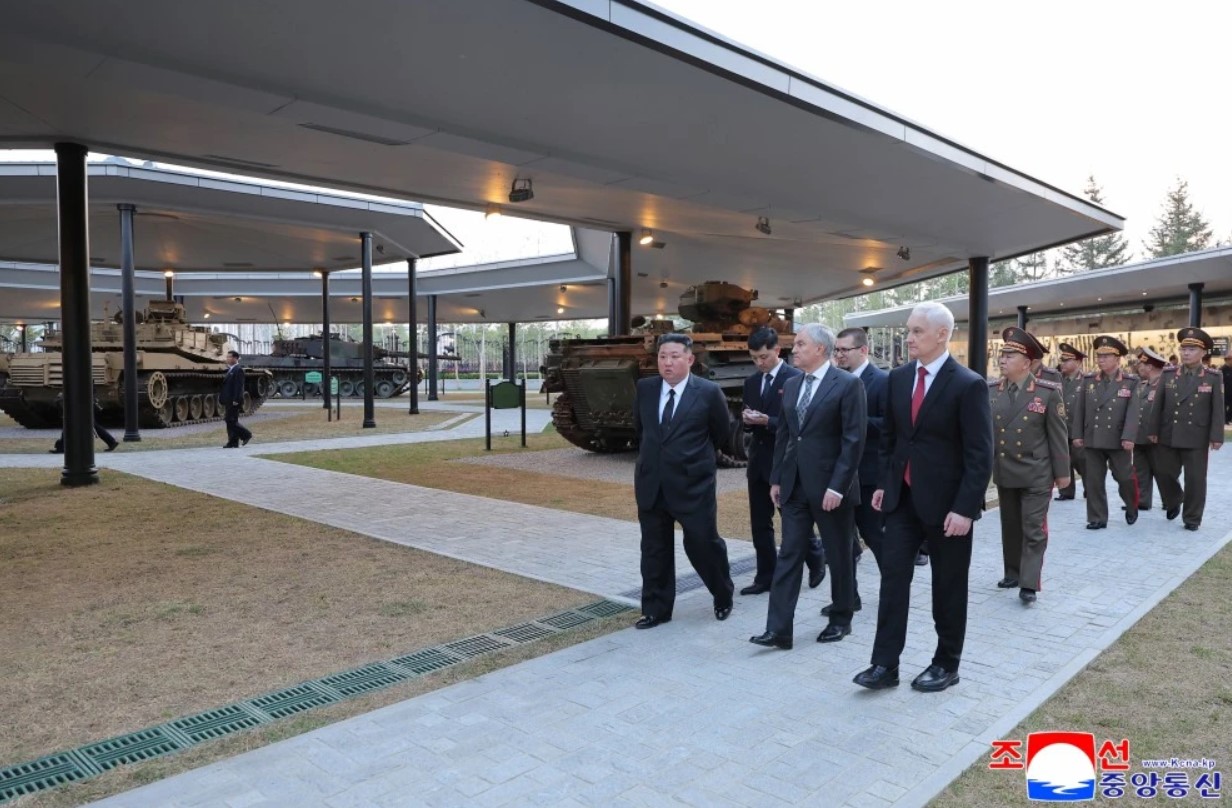 Photo: North Korea opens a museum of military exploits featuring equipment captured from the Ukrainian military (KCNA)
At the ceremony, Russian Defense Minister Andrei Belousov, leading the Russian delegation, stood alongside North Korean leader Kim Jong Un and the country’s top officials.
The complex is dedicated to the participation of North Korean troops in the battles in Kursk.
How museum was built
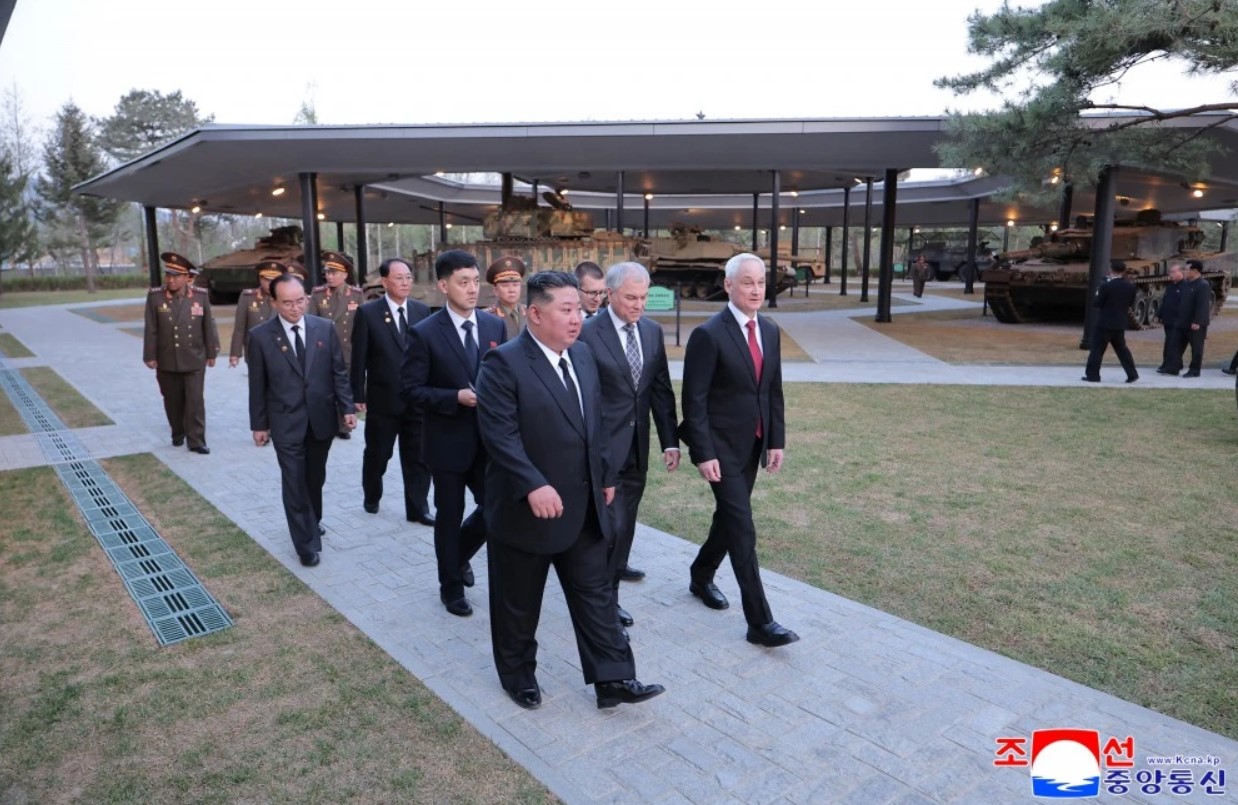 Photo: North Korea opens exhibition of equipment captured from Ukraine: first details (KCNA)
As early as February 14, 2026, Kim Jong-un personally visited the construction site. He inspected the sculptural panels, checked the progress of the work, and gave instructions regarding the memorial’s final appearance. Units of the Korean People’s Army were involved in the construction.
When North Korea entered Russia's war against Ukraine
The first reports of North Korean troops being sent to Russia appeared in October 2024. The Defense Intelligence of Ukraine (HUR) and South Korean intelligence recorded the transfer of the first 1,500 soldiers, who were later deployed to the Kursk region.
Ukrainian experts have examined debris from North Korean KN-23 ballistic missiles, which Russia is using to attack Ukraine.
These missiles contain civilian chips and components dating back 50 years, and are not copies of Russian Iskander missiles, despite their outward resemblance.
North Korea has sharply increased its nuclear weapons production capacity. Increased activity has been observed at facilities in Yongbyon, and satellite images confirm the construction of a new uranium enrichment plant.