Key EU port chief urges delay to Russian gas ban, FT reports

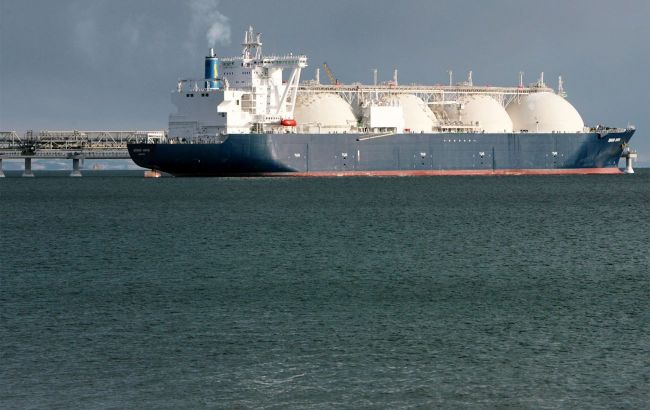 Photo: A liquefied natural gas tanker (Getty Images)
The EU's plan to phase out Russian gas by 2027 has sparked a new debate. Industry insiders are warning about the risk of a new dependence, the Financial Times reports.
Ivan Jimenez, head of the Spanish port of Bilbao, said imports of Russian LNG should be reduced gradually, arguing that it is impossible to eliminate them "from one day to another."
According to him, a sudden ban on Russian gas could leave the European Union overly dependent on supplies from the United States.
"I think that this is not the moment to cut the gas coming from Russia because that could be a very problematic question for the European Union. We need more resilience," Jimenez said.
He also noted that Russian LNG imports to the EU have recently increased again amid the crisis in the Middle East. In addition, Russian LNG is generally cheaper than US supplies, prompting importers to bring in as much as possible before the ban takes effect.
The Spanish government, however, supports the European Union's plans. Spain's Energy Minister Sara Aagesen Muñoz said the recent increase in Russian LNG imports is temporary, "and we understand that they are linked to logistical operations in a changing and very volatile context regarding prices."
According to her, Europe should completely phase out Russian gas starting on January 1, 2027, in line with the European Commission's roadmap.
"I insist that yes, we believe it is possible, and from January 1, Europe needs to move away totally from Russian gas," she added.
According to the Financial Times, most Russian gas currently reaching Europe is supplied as LNG from the Yamal LNG project. Meanwhile, the share of US liquefied natural gas in EU imports has risen from 6% in 2021 to 29%, making the United States the bloc's second-largest supplier after Norway.
Earlier, analysts warned that escalating tensions in the Middle East had affected Europe's gas market. After LNG supplies from Qatar declined due to the situation around the Strait of Hormuz, the EU increased gas imports from the United States, Norway, Algeria, and Russia.
According to the Institute for Energy Economics and Financial Analysis (IEEFA), Russian LNG imports into the European Union rose by 25% between March and May, despite Brussels' plans to completely phase out Russian energy imports by 2027.