Kazakhstan profits heavily as Russians flee mobilization and war

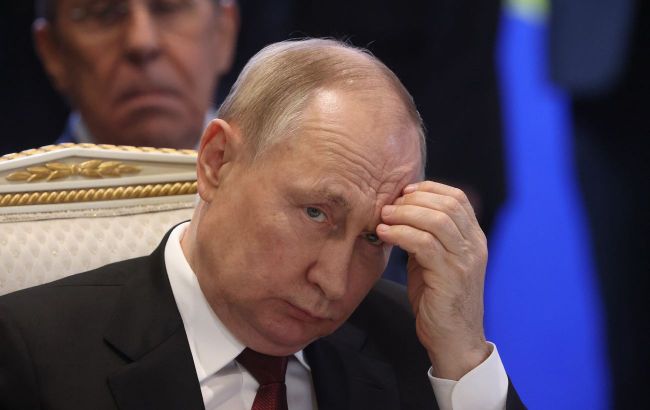 Russian leader Vladimir Putin (photo: Getty Images)
Kazakhstan is introducing new entry rules for Russians—they will now have to pay for an electronic permit to cross the border, and the system will involve creating a digital profile with biometric data, according to the Foreign Intelligence Service of Ukraine.
Changes to Kazakhstan's migration legislation were signed by President Kassym-Jomart Tokayev. The new rules will come into force on November 30, 2026.
Citizens of the Russian Federation entering Kazakhstan by land through main border checkpoints will be required to obtain a paid electronic permit, QazETA, in advance. Applications must be submitted at least 72 hours before the trip.
The cost of the permit will be 3,900 tenge, equivalent to approximately 7.3 euros (about 800 rubles). If obtained directly at the border, the fee increases to 7,600 tenge, or about 14.3 euros.
Without a permit, Russians may be denied entry and deported.
Initially, the system will operate in airports. By mid-December, it is planned to extend it to international railway routes and ports as well.
In addition, Russians will have to create a digital profile with biometric data. The permit will be valid for 180 days, but stay in Kazakhstan will be limited to no more than 90 days.
Kazakhstan will profit from Russians
As noted by the Foreign Intelligence Service of Ukraine, after the start of Russia's full-scale invasion of Ukraine, Kazakhstan became one of the destinations for Russians leaving the country due to fear of mobilization and war. Some Russian citizens also used Kazakhstan to work and conduct business outside of Russia.
Now this flow will bring direct income to the Kazakh state through paid entry permits.
At the same time, the process of reducing Central Asian countries' dependence on Russia is not limited to Kazakhstan. At a meeting of Central Asian leaders and Azerbaijan, Kyrgyz President Sadyr Japarov proposed creating a single tourist visa for foreigners.
Recently, Kazakh President Kassym-Jomart Tokayev, during a personal meeting with Russian leader Vladimir Putin, proposed "freezing" Russia's war against Ukraine and returning to the negotiation conditions established in Istanbul in 2022.