Japan prepares special weapons as threats from China, Russia and North Korea surge

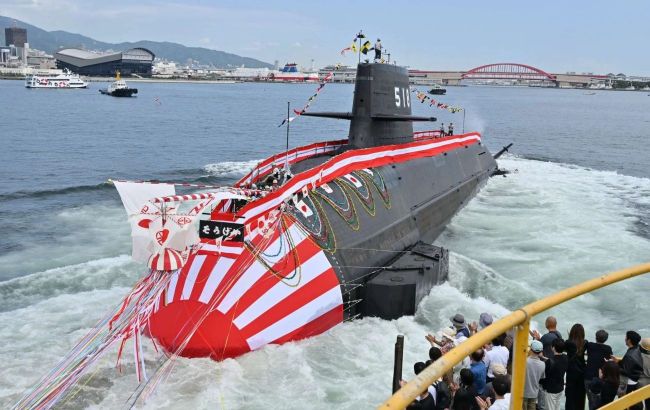 Photo: JS Sōgei (SS-518), the newest Taigei-class submarine (Japan Maritime Self-Defense Force)
Japan plans to strengthen its submarine forces with a new type of long-range weapon. In the defense budget request for fiscal year 2027, Tokyo separately indicated, for the first time, its intention to develop a missile that can be launched from underwater and will have high survivability, according to The Maritime Executive.
According to the article, Tokyo is currently considering several options. The first option is a hypersonic ballistic missile with vertical launch capability. The second is a hypersonic cruise missile with a ramjet engine that can be launched through submarine torpedo tubes.
Both types share common characteristics: very high speed over long distances and the ability to maneuver during flight. This reduces reaction time for the adversary and makes tracking and intercepting the missile more difficult.
At the same time, Japan still has a long way to go to create such a system. Its Maritime Self-Defense Force currently has neither the corresponding hypersonic missiles nor submarines specially adapted for their use.
Japan is already working on hypersonic weapons
Tokyo has previously announced development of both variants of hypersonic systems. In particular, this concerns the Type 25 hyper-velocity gliding projectile program. Its Block 2B version is planned to have a range of approximately 1,620 nautical miles, or about 3,000 km, with speeds of Mach 5.
In parallel, Japan is developing a less advanced hypersonic cruise missile project with a ramjet engine.
Current submarines are not adapted for this
Japan's newest attack submarines are the Taigei-class vessels. They have six 533 mm torpedo tubes and can already launch subsonic cruise missiles, including the Harpoon UGM-84.
As of now, Japan has commissioned five such submarines into its fleet. The latest - JS Sōgei (SS-518) - was launched in March 2026, the publication notes.
Tokyo is also considering nuclear submarines
Separately, discussions are ongoing regarding the possibility of Japan developing nuclear-powered submarines. Despite constitutional restrictions, Japanese Defense Minister Shinjiro Koizumi has openly spoken about the necessity of the country acquiring such vessels.
If Tokyo indeed pursues this path, a future submarine with vertical launch systems could conceptually resemble projects being developed under AUKUS.
Japan is concerned about aggressive neighbors
The strengthening of the submarine component of Japanese forces occurs against the backdrop of growing threats that Tokyo perceives from China, Russia, and North Korea. Submarine hypersonic weapons hold particular significance for Japan due to the development of North Korea's nuclear arsenal.
North Korea is already working on the possibility of creating an underwater nuclear threat. Kim Jong Un previously inspected a submarine with a displacement of 8,700 tons that is under construction.
Japan and South Korea also fear that Russia may have been helping North Korea develop corresponding technologies in exchange for Moscow's support in the war against Ukraine.
What else is known about Japan's rearmament
Tokyo has highly valued Ukrainian drones. The first deliveries of Terra B1 unmanned aerial vehicles from Ukrainian company TerraDrone will soon arrive for the Japan Maritime Self-Defense Force.
Also, drawing on experience from the war in Ukraine, Japan has developed its own training UAV. It costs only $450 and allows operators to train freely without fear of damaging expensive equipment.
Additionally, Australia and Japan have tested the Boobook laser weapon. This is the first such cooperation project between the defense industries of the two countries.