ISW: Russia cannot form strategic reserves or increase pace of offensives

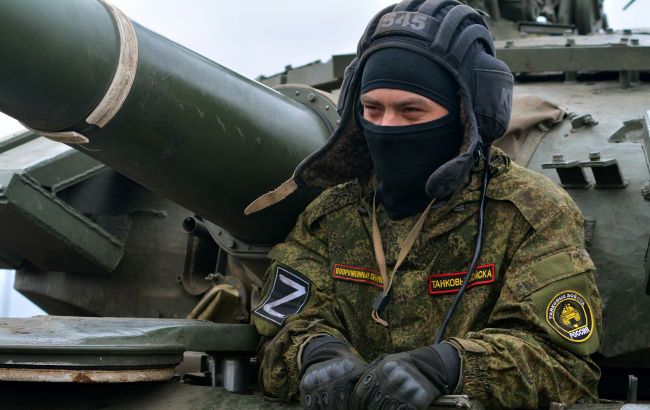 Photo: The Russians cannot open a new front at the moment (Getty Images)
Russia's army is currently unable to form a strategic reserve. As a result, in 2026 the enemy will be forced to advance slowly, maintaining its current scale of offensive operations, according to a report by the US-based Institute for the Study of War (ISW).
Background
In their latest assessment, ISW analysts referred to comments made the previous day by Kyrylo Budanov, head of Ukraine's Main Intelligence Directorate (HUR), who said that Russia has fulfilled its plan to recruit 403,000 personnel into the army and is set to exceed that target by the end of the year.
According to Budanov, Russia is able to continue recruitment for a "prolonged period," given its population size and financial resources. Moreover, the Kremlin plans to increase recruitment to 409,000 personnel in 2026.
At the same time, the HUR chief noted that Russia has not yet created a strategic reserve of the required size because it is "constantly" using its operational reserves to sustain ongoing combat operations against Ukraine.
ISW assessment
According to ISW, the Kremlin is creating conditions for forced partial conscription into the reserve in order to maintain troop levels and possibly attempt to form a strategic reserve despite Russia’s continued heavy losses in the war against Ukraine.
The analysts stressed that their assessment focused primarily on the difficulties Russian recruiters appear to be facing in attracting volunteers, even with the financial incentives the Kremlin is willing to offer — an issue Budanov did not address directly.
ISW notes that the Russian army is currently sustaining a sufficient inflow of personnel to replace losses. However, Russia has been unable to build reserves large enough to generate the necessary manpower for specific sections of the front without redeploying forces from other areas.
"The requirement to draw reserves from some sectors of the line to focus on operationally significant undertakings often leaves Russia’s flanks undermanned in ways that create vulnerabilities, sometimes allowing Ukrainian forces to counterattack and retake land," the experts explained.
In particular, Ukrainian forces recently recaptured territory north of Huliaipole while Russian troops were advancing toward the city center. Ukraine also liberated much of a Russian breakthrough toward Dobropillia (northwest of Pokrovsk) during Russia’s offensive on Pokrovsk in early November.
"The Ukrainian liberation of much of Kupyansk also benefited from the concentration of Russian forces elsewhere on the line and the lack of ready Russian operational reserves in the area," ISW added.
ISW conclusions
Analysts believe that Russian forces are currently unable to open a new front or expand their recent limited attacks in the Sumy and Kharkiv regions.
In particular, Russia's manpower constraints — despite its overall demographic advantage — represent a serious limitation on Russian operations and are likely to remain so next year.
"Russian forces are therefore unlikely to dramatically change the pace and scale of Russian advances along the frontlines in 2026 if support for Ukraine continues at current levels. The grinding nature of Russian advances incurs high casualty rates, and Russian forces need incoming personnel to replenish losses in active sectors of the frontlines to maintain a slow but steady rate of advance," ISW concluded.
What Budanov also said
Earlier, HUR chief Kyrylo Budanov said that Russia aims to fully seize control of Donbas and the Zaporizhzhia region in 2026.
He also noted that Moscow would be unable to wage a war on two fronts. For this reason, Budanov suggested that if the war in Ukraine ends, Russia's next potential target could be the Baltic states.