ISW: Pokrovsk capture won't deliver a breakthrough, but shows Moscow's evolving tactics

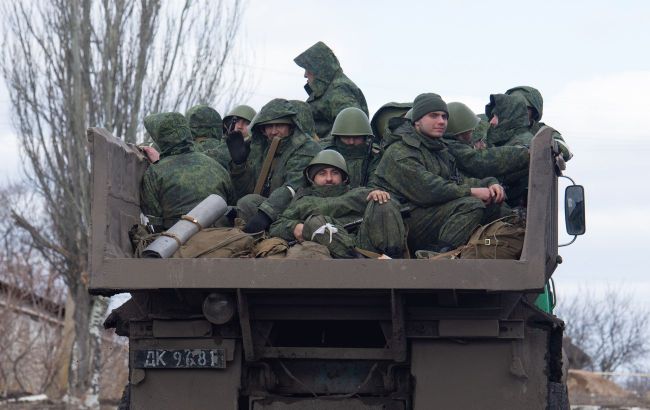 Illustrative photo: Russia changed tactics on the front line after the battles for Pokrovsk (GettyImages)
Most military analysts believe that Pokrovsk will eventually surrender. When that happens, it will be a Pyrrhic victory for Russia, which is unlikely to be able to destroy Ukraine's defenses in the east of the country, according to a report from the Institute for the Study of War (ISW).
The final capture of the city will give Russia only minor tactical advantages. However, the campaign shows that the Russian army is learning and adapting, which could spell serious trouble for Ukraine in the short and medium term.
The Kremlin is exaggerating the significance of the capture of Pokrovsk to present Russia's advance on the battlefield as inevitable. In reality, Russia has paid a high price for its offensive in the Donetsk region. Over the past 20 months, Russian troops have advanced only 40 km from Avdiivka to Pokrovsk.
From the start of offensive operations to capture Avdiivka in October 2023 until the summer of 2024, Russian troops lost armored vehicles and tanks equivalent to at least five divisions (over 1,000 armored vehicles and over 500 tanks) in the Pokrovsk area.
"Since then, Russian forces have changed their tactics to deprioritize mechanized assaults in favor of small unit infantry infiltration missions, likely to preserve vehicles that have low survivability against Ukraine’s drones. This switch has enabled Russian forces to continue advances at literal footpace and at high losses. In just the Pokrovsk area, Russian forces gained only about 12 square miles in October this year. During the same period, they reportedly lost 25,000 troops," the ISW notes.
According to analysts, the fall of Pokrovsk is unlikely to lead to a breakthrough for the Russians. The forces stationed there, which are now well versed in positional warfare, are unable to advance quickly to capture more territory. Russia lacks the troops for a decisive breakthrough on a large scale, especially since Ukraine maintains a dense network of field fortifications directly west of Pokrovsk.
New Russian tactics
However, in this campaign, the Russians have demonstrated a new operational scheme for capturing Ukrainian cities: first, systematically destroy Ukraine's logistics lines with drones, and then send in infantry assault and sabotage groups to overwhelm the besieged defenders. Russia's ability to weaken Ukraine's positions on the battlefield with medium-range strikes is an alarming development.
The defense of the fortified belt of well-fortified cities such as Sloviansk, Kramatorsk, Druzhkivka, and Kostiantynivka will be significantly complicated if Russia is able to deprive Ukraine of the railways and highways necessary to supply these strongholds. Indeed, Russia is already trying to repeat its experience in Pokrovsk.
Analysts note that in early November, Ukraine was already forced to suspend rail service to Kramatorsk due to the threat of drone strikes.
The ISW emphasizes that Ukraine must strengthen its countermeasures against Russian drones, in particular by developing means of striking targets at a distance of 60-100 km from the front line. At the same time, Western assistance remains a decisive factor—the supply of artillery, missiles, and intelligence data.
Analysts conclude that as long as Russia is making progress on the battlefield, the Kremlin will not be interested in real negotiations, and diplomatic efforts will remain ineffective without a halt to the Russian offensive.
Pokrovsk-Myrnohrad direction
This direction remains one of the most important in eastern Ukraine due to the strategic role of settlements and key logistics routes. In recent weeks, Russian troops have intensified their offensive, trying to break through the defenses and complicate the supply of Ukrainian units.
The East military group previously reported an increase in the number of enemy assaults, in particular with the widespread use of infantry supported by artillery.
The Defense Forces are holding their positions, inflicting significant losses on the enemy and preventing them from advancing deeper into the defenses.
National Guard Commander Oleksandr Pivnenko noted that Ukrainian troops are gathering forces for counterattacks in the Pokrovsk area, although difficult weather conditions are significantly affecting the course of the fighting.
According to Yevhen Lasiichuk, commander of the 7th Assault Ranger Corps of the Airborne Forces, Russian troops, having failed to capture Pokrovsk and stuck in urban combat, were forced to change tactics.