Israel’s next Gaza move triggers fears of widespread destruction

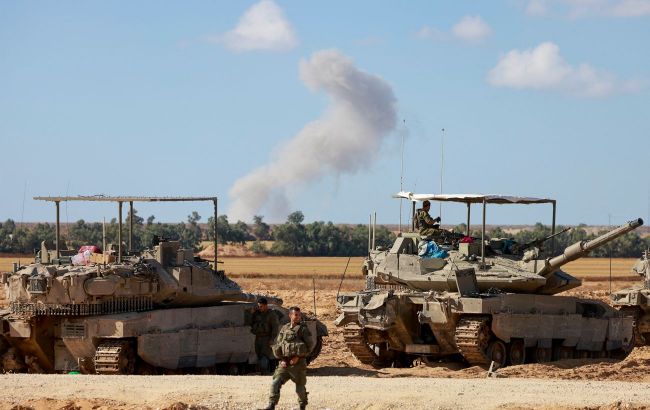 Israeli army tanks (Photo: Getty Images)
Israeli companies have begun negotiations regarding unprecedented work to demolish destroyed buildings and clear rubble in the Gaza Strip. The project envisages the complete leveling of certain areas for the subsequent construction of residential neighborhoods, reports The Jerusalem Post.
Israeli firms plan to convert millions of tons of concrete debris into secondary building materials for new structures. A significant portion of the rubble is planned for removal from the region.
The JP's sources describe the upcoming work as historic in scale. The land-leveling process is intended to prepare the ground for new homes.
"We are talking about enormous amounts of destruction that they want to turn into recycled construction materials, to transport a large part of it, and at the same time to level the area in order to build new homes on it, and all this is happening even before Hamas has been disarmed and the Strip has been demilitarized," a security service source reported.
What problems might arise?
Representatives of the security sector warn of serious risks. The pace of preparation for reconstruction appears to be too fast.
Key problems of the project:
- Lack of demilitarization of the region at the start of the work;
- Failure to adhere to reasonable preparation timelines;
- The risk of concealing Hamas's underground infrastructure.
If construction begins now, the war could return. Officials explain this simply: the enemy is still hiding under the rubble. Underground factories, weapons depots, and command centers are located there.
"At this rate, there will be no choice but to resume fighting in order to disarm it and cut off its underground infrastructure, where it is hiding, managing its preparations for war with Israel, operating a production line of weapons, and hiding weapons depots," the official emphasized.
Intelligence services believe that the current trajectory leads to a dead end. The elimination of Hamas's underground infrastructure must become a priority. Only after complete disarmament and clearance of the tunnels can peaceful construction be discussed.
What is known about the situation between Hamas and Israel?
The Hamas group refuses to disarm in the Gaza Strip. Israeli intelligence sees Hamas's actions as playing for time.
Analysts note that Israel's military spending decreased by 4.9 percent to $48.3 billion. This reflects a reduction in the intensity of the war in Gaza during 2025 following the ceasefire agreement with Hamas.