Israel and Lebanon agree on who can monitor Hezbollah’s disarmament - Reuters

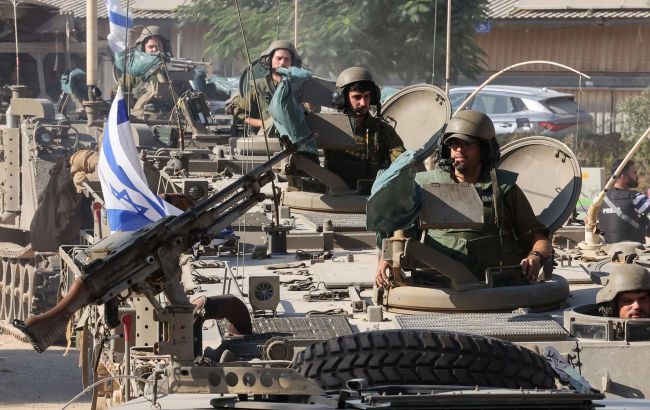 Photo: Israel will not withdraw troops until Hezbollah is disarmed (Getty Images)
Israel and Lebanon have agreed that Britain, Italy, Switzerland, and Indonesia could become potential participants in an international mission to verify the disarmament of Hezbollah, reports Reuters.
According to sources, the list of candidate countries was drawn up following negotiations held last week in Rome with US mediation.
This was the latest round of talks between Israel and Lebanon on the implementation of the June agreement, which provides for the phased withdrawal of Israeli troops from Lebanon alongside the disarmament of Hezbollah.
Sources say the aforementioned countries could help define the scope of the mechanism, provide personnel to monitor its implementation, or deploy troops for observation or participation in inspections that would verify the disarmament.
Another interlocutor said that discussions regarding the countries on the list are still at an early stage. At the same time, he expressed "cautious optimism" about the project's further progress.
In turn, a representative of the Israeli embassy in the US stated that negotiations on the composition of the body that will oversee and verify the disarmament of Hezbollah are ongoing, and an agreement has not yet been reached.
Reuters also notes that Israeli forces are occupying a so-called security zone extending 10 kilometers into southern Lebanon. They have stated that they will not unilaterally withdraw troops until Hezbollah has been disarmed.
Two sources also reported that under the proposed mechanism, inspections would be conducted in villages in southern Lebanon to verify the absence of weapons there. According to them, Israel insists that these inspections include private homes.
At the same time, the Lebanese army has resisted pressure to search private property, fearing that such searches could provoke tensions in southern Lebanon and in relations with Hezbollah more broadly. Security officials told Reuters that the army would require search warrants for each house.
In turn, a representative of a foreign security agency stated that the issue of private property would need to be resolved, including how and by whom searches would be conducted. He also noted that the degree of freedom of movement for foreign troops would need to be clearly defined.
What else is important to know
On June 19, Israel and Hezbollah agreed to resume the ceasefire in Lebanon. This came after the truce was derailed following the outbreak of conflict in Lebanon.
In July, the media also reported that US President Donald Trump, during a phone call, urged Israeli Prime Minister Benjamin Netanyahu to begin withdrawing troops from parts of Syria and Lebanon. Washington believes that military presence in these areas only heightens regional tensions.